

Washington (CAR) Analysis | April 6, 2023 by Climate Journalist Noreen Wise; Image Credit: AdobeStock
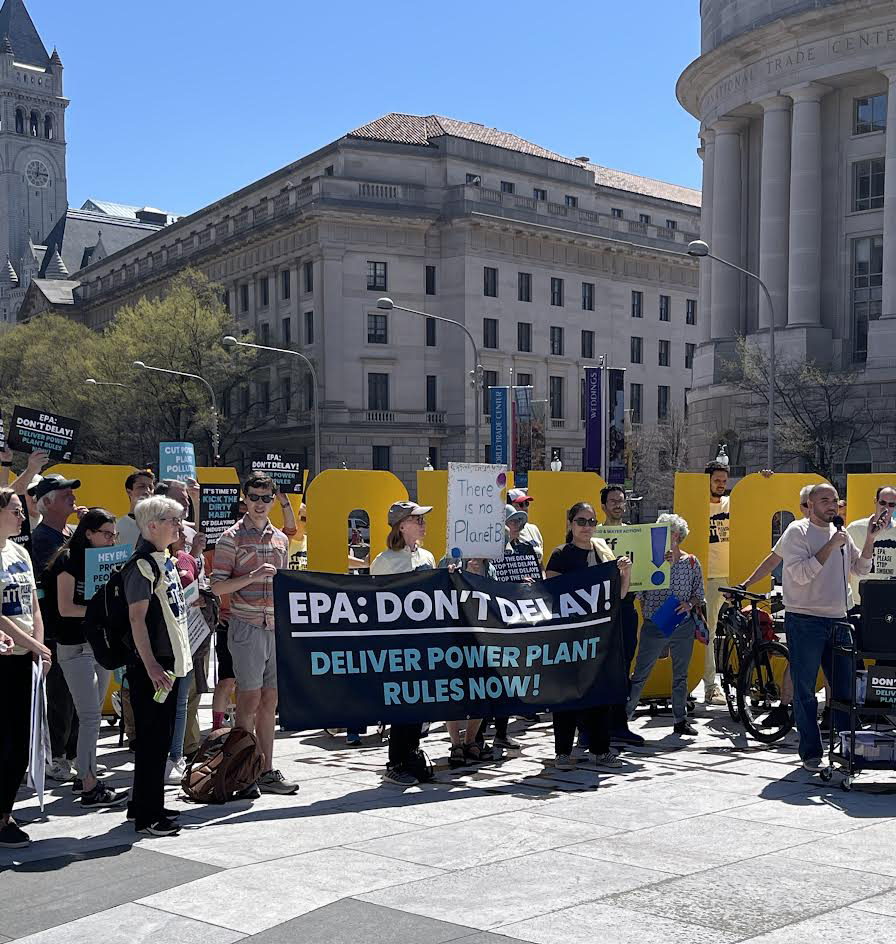
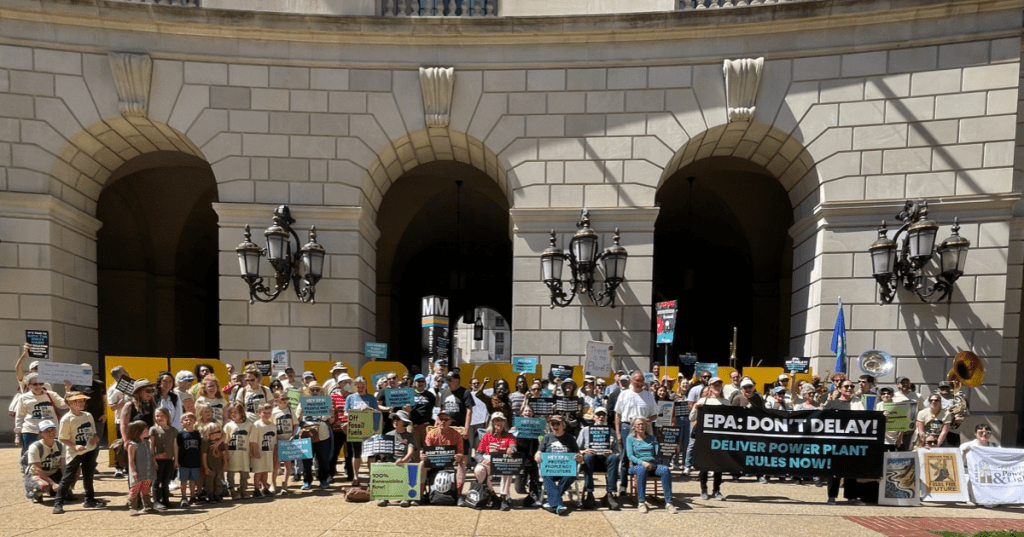
Protestors from a Coalition of climate justice and environmental organizations poured into DC on Tuesday in response to Chesapeake Climate Action Network’s (CCAN) call to action, chanting their demand for Environmental Protection Agency’s new Power Plant Rules. “EPA, don’t wait. Regulate.”
‘When the EPA drags its feet, you see it on the local level. You see the impacts,” said one of the organizers who helped kick off the rally. “You see the pollution that happens, and it’s dangerous.”
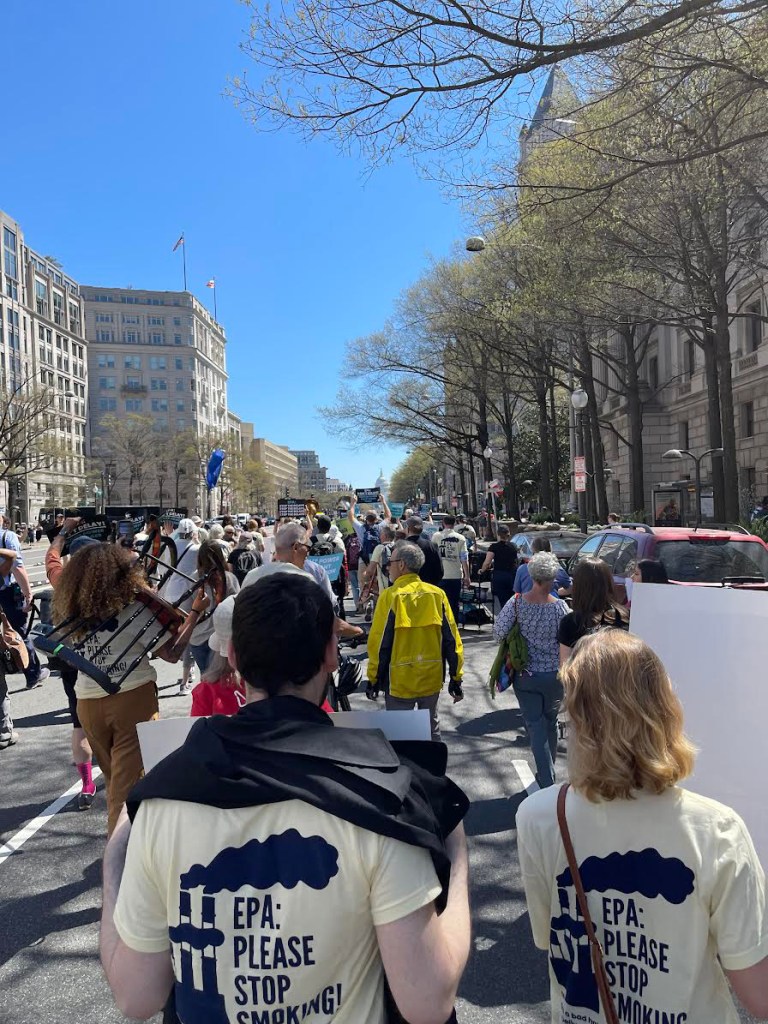
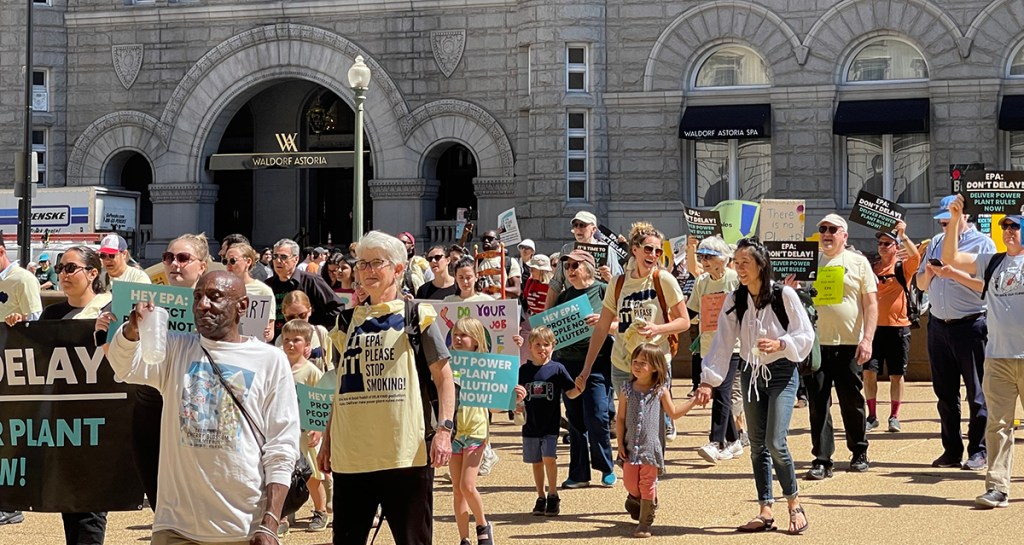
“EPA PLEASE STOP SMOKING,” and, “EPA has the bad habit of delaying pollution rules. Deliver new power plant rules now,” were the words splashed across the yellow tee shirts as the group determinedly set off for 1200 Pennsylvania Ave.
The weather cooperated with brilliant sunshine and unseasonably warm temperatures. A marching band led the way from Freedom Plaza to EPA headquarters while the crowd chanted: “We are unstoppable, another world is possible.”
The backdrop for this momentous demonstration was the former Trump Hotel on Pennsylvania Avenue while news of Trump’s pending arraignment in lower Manhattan flooded social media.
It was Trump who cancelled Obama’s Clean Power Plan on January 19, 2019, and replaced it with the watered down Affordable Clean Energy rule (ACE). Two years later, on January 19, 2021, a DC court vacated ACE.
I spoke with CCAN’s Federal Policy Director and lead rally organizer, Quentin Scott, before the march began and asked several questions to get the backstory.
Why was this rally and march organized for today?
SCOTT: Evergreen Collaborative put out a report saying the EPA was falling far behind on a lot of key carbon pollution rules for power plants, so we were inspired by that report. We recognized that we can’t afford anymore delays. So we decided to do this (march to EPA headquarters) at the beginning of month because EPA is set to release some very critical rules this month and we just want to hold them accountable for actually doing that. They’ve already delayed twice.
In the opening of Evergreen Collaborative’s March 2023 “Falling Further Behind, A Report Card on EPA’s Progress on 10 Important Power Sector Rules,” it was noted that “After several delays and missed deadlines, EPA must go further, faster to finalize these rules during President Biden’s first term and keep our climate and environmental justice targets within sight.”

CLIMATE CHANGE & ENVIRONMENTAL HAZARDS:
Plastic Bank and Ocean Bound Social Plastic, Really?
Alarming Findings | Are We Inhaling Nanoplastics?
Golf Courses and the “Good Life” May Kill You
What specifically did the EPA delay?
SCOTT: A Pollution Rule for existing power plants and new power plants. Basically it’s a rule that will regulate how much carbon pollution they will spew out of their smokestacks in a given year.
What about the Supreme Court decision in late 2022 that prevented EPA from regulating CO2 emissions?
SCOTT: What they [SCOTUS] said was that EPA violated major questions doctrine, but that EPA could still regulate carbon, they just can’t do it for the whole country at once. They had to come up with a smaller ‘inside the box.’
Is there anything more you want EPA to do?
SCOTT: We’re really focused on just the carbon pollution rules. There are a number of other rules that we are interested in. For example, cumulative impact analysis for permitting which is really related to EPA’s portion of permitting infrastructure projects for utilities and gas plants and stuff like that. The EPA participates in that process and we want them to use something called, cumulative impact analysis when they issue those permits.
What will be the outcome if the EPA does everything you’re requesting?
SCOTT: If EPA meets all their self-imposed deadlines, it would significantly reduce carbon pollution and should put us on a pathway that would reduce carbon and greenhouse gases 50-52% by 2030, if they implement these rules along with the implementation of the Inflation Reduction Act (IRA).
Is there anything that the public can do to help with this?
SCOTT: The public plays a really vital role in this. Anytime EPA proposes these rules, they give anywhere from 45-90 days for public comment. So we ask that anybody submit a comment. A lot of organizations send out emails where they have prepopulated statements where you just add your name and address and send them in. Just last week a coalition of us were able to get 600,000 public comments for the sub rule just last week. Anytime we can do that for upcoming rules, it has a huge impact on what the EPA does.
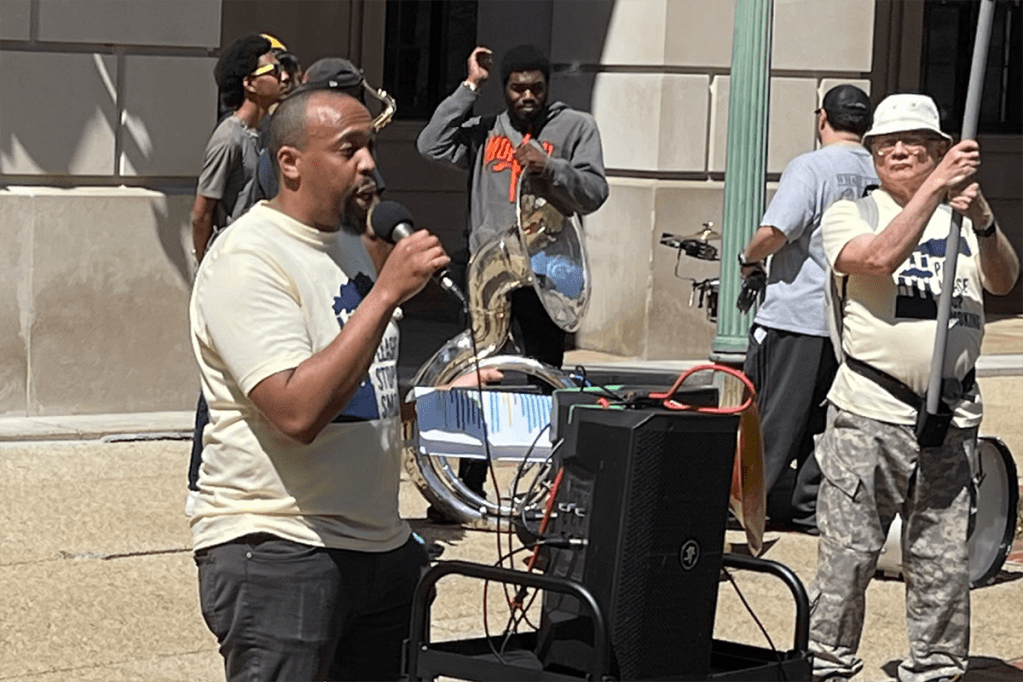
Once at the front doors of EPA, a series of organization leaders shared their insights regarding the major health risks of EPA’s continued delays. Emily Wurth, the Organizing Director of Food & Water Watch, spoke on behalf of the two million US members. “EPA has the authority to do something about this. To both address the climate crisis and protect public health from the toxic emissions from power plants.”
A representative of the Alliance of Nurses for Healthy Environments asked the crowd to think about how they got to the rally, and whether at any time we had to stop to think about breathing. She asked if any of us had ever thought about how difficult it is for some people to breath, for children to breath. “As a family nurse practitioner in my years, I’ve seen so many children gasping for air, struggling to breath, and it’s frightening for them. And it’s frightening for their parents.” She went on to explain, “I’ve seen first hand how air pollution affects the health of children and affects communities.”
Her impassioned plea to think about children who can’t breath made me stop to think of a teacher friend of mine who led an 8th grade trip to Wahington, DC from Detroit back in April of 2016 during spring break. It was a small group of 15 students who’d saved their pennies, held fundraisers, applied for grants, all for this opportunity of a lifetime to see their nation’s capital. The afternoon they arrived, I was supposed to meet the group on National Mall. My friend called in a panic. One young student couldn’t breath. He was having an asthma attack, an extreme one. The thought of him gasping for air terrified me. When I arrived, the boy’s mom was on the phone talking with my friend, trying to problem solve. I connected with the school trip’s course leader to find out what medical support was provided the group through their travel program. The mom said her son hadn’t had such a severe attack in months. He’d apparently packed his inhaler in his suitcase which was on its way to the hotel. So much anguish, fear, turmoil and chaos for this innocent child, and multiple adults, during what was supposed to be a thrilling, life-altering opportunity of a lifetime that would inspire and change the boy’s destiny.
The EPA failed to release its carbon pollution rules in June of 2022 and then again in March of 2023. The Coalition will not accept another delay. People’s health is on the line.
Quentin Scott spoke of the six things the Coalition is demanding of the EPA:
- No more delays, provide the promised carbon standard rules for existing and new power plants;
- Strengthen power plant soot standards;
- Expedite updated mercury and air toxics standards;
- Coal ash action;
- Approve California’s vehicle emissions waiver (done); and
- Implement cumulative impact analysis in permitting.
The closing speaker was Russel Armstrong, Hip Hop Caucus climate policy director. “The EPA has a legal and moral responsibility to ensure our air and water is clean, which requires protecting frontline communities from the adverse health impacts and toxic pollution from coal and gas plants.”
© Copyright 2023. ALL Rights Reserved.

 Climate Action Report