

Washington (CAR) Analysis | July 13, 2023 by Climate Journalist Noreen Wise; All Image Credits: AdobeStock. Updated August 14, 2023.
Held v Montana was the first constitutional climate case to go to trial in the United States. The landmark legal battle, a Complaint for Declaratory and Injunctive Relief, was filed by Rikki Held, et al. — sixteen environmental activists aged 5 to 22 — in March 2020, the same month that the World Health Organization (WHO) declared COVID-19 a global pandemic. The defendants in the case are the State of Montana, its Governor, and various State agencies.
The young Plaintiffs alleged that they had suffered a variety of constitutional harms as a result of the State’s statutory State Energy Policy (SEP), and the “Climate Change Exception” to the Montana Environmental Policy Act (MEPA). The injured parties did not seek monetary compensation, but rather they were demanding that the Big Sky State change its energy policies — specifically those of permitting and subsidies, and repealing the State’s new law stating that climate change can’t be factored into its energy policy decision making — in order to uphold the State’s constitutional obligations to both the present and future generations.

Initially, the Defendants responded by petitioning to have the case dismissed. Their request was denied by the Montana Supreme Court. At issue was the State constitution: “the state and each person shall maintain and improve a clean and healthful environment in Montana for present and future generations.” It was thus determined by the State Supreme Court that the “Plaintiffs had sufficiently raised a factual dispute as to whether the SEP and the MEPA contributed to their injuries and that they had adequately established that these injuries were redressable.”
The ground-breaking trial began on June 12, 2023 and ended when the Defendants rested on June 20, 2023. The world had to wait several months for Judge Kathy Seeley of Montana’s First Judicial District Court, Lewis and Clark County, to issue a ruling.
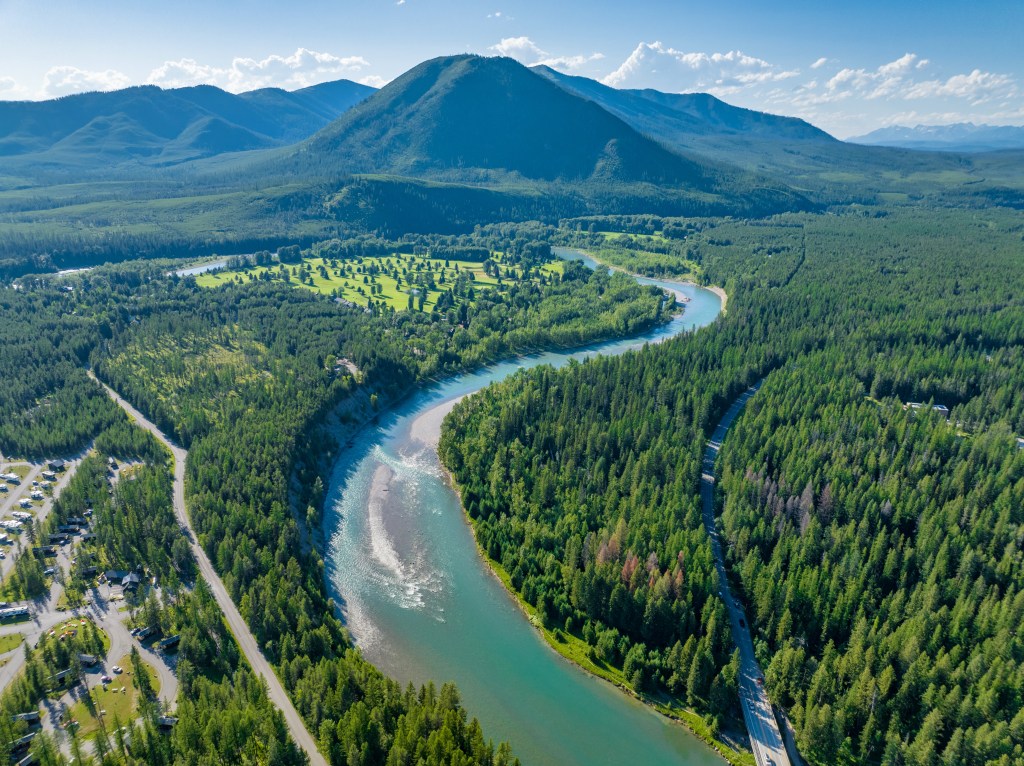
Montana is endowed with extensive natural wonders. The freshness of undisturbed wilderness, soaring mountains, pristine air, sparkling clear waters, and enchanting landscapes that seem to stretch to eternity. Its spectacular beauty leaves millions in awe each year. Montana has a population of only 1.124 million (2023), and a landmass of 147,040 square miles, which is slightly larger than Japan (population 123.29 million, 2023), and is the fourth largest U.S. state. Such a low population in relation to its massive land size is a critical determinant in the State protecting its natural resources.
Glacier National Park is located in the northwest corner of Montana, along the border with Canada. The Treasure State’s tourism industry is focused on its sensational natural uniqueness, rather than its production of gold, silver and copper, after which the State’s nickname is coined. Not only is Montana’s rich and diverse natural landscapes the cornerstone of its wealth, the State’s environmental wonders are some of the most cherished jewels of the United States.
According to a Montana Public Radio article published on May 17, 2022, 12 million nonresidents visited Montana in 2021 despite COVID still being a deadly concern. These visitors spent nearly $5 billion in the state, a substantial sum, considering that Montana’s mining industry only generated $1.6 billion, and the oil and gas sector, $1.7 billion.

CLIMATE CHANGE & ENVIRONMENTAL HAZARDS:
Plastic Bank and Ocean Bound Social Plastic, Really?
Extreme Tornadoes Digging Up Ground Near Superfund Sites
Golf Courses and the “Good Life” May Kill You
Protecting Montana’s unique natural beauty has been a major priority for the State ever since the 20th Century’s passionate environmental movement that swept the country in the late 1960s and early 1970s. This revolutionary era was ignited by the dense, toxic smog that filled the streets of New York City and Los Angles, along with Rachel Carson’s alarming book Silent Spring, published in 1962. The Herculean public effort of this environmental movement, brought the Environmental Protection Agency, Earth Day, and the Clean Water Act. In the midst of these landmark initiatives, Montana held a Constitutional Convention to draft legislation that would place environmental protections at the top of its priority list. An updated constitution was signed into law:
Section 1. Protection and improvement.
1. The state and each person shall maintain and improve a clean and healthful environment in Montana for present and future generations.
2. The legislature shall provide for the administration and enforcement of this duty.
3. The legislature shall provide adequate remedies for the protection of the environmental life support system from degradation and provide adequate remedies to prevent unreasonable depletion and degradation of natural resources.
There are 5 other states with similar language in their constitutions: Massachusetts, Pennsylvania, Rhode Island, Hawaii and New York which just passed its updated wording.

PUBLIC TRUST DOCTRINE
As defined by the Legal Information Institute, the Public Trust Doctrine is “a legal principle establishing that certain natural and cultural resources are preserved for public use. Natural resources held in trust can include navigable waters, wildlife, or land. The public is considered the owner of the resources, and the government protects and maintains these resources for the public’s use.”
Environmental lawyer Julia Olson has made the Public Trust Doctrine the backbone of the legal actions she’s filed in states across the country. Her goal is to hold state governments accountable for climate change impacts in their states. These legal proceedings have gone nowhere, which is one of the reasons why Held v Montana captured the attention of climate activists and environmentalists across the globe. Olson is the attorney that represented the 16 young Plaintiffs in this watershed case.

THE DEFENDANTS ‘POSITION
The State of Montana, its Governor, and various State agencies argued at trial that the damages that the Plaintiffs claim to have suffered can’t be attributed to Montana since Montana is a very small piece of the fossil fuel production pie. “The State’s contribution to climate change is minimal.”
Judge Seeley was the one tasked to determine how responsible the state of Montana is for the Plaintiffs’ injuries. It was foreseen that dozens of the climate change cases tied up in courts across the country would be able to move forward if Seeley ruled in favor of the young Plaintiffs.
With destructive floods, extreme heat, and massive wildfires touching every corner of the United States, it’s time for such a bold move on the part of the court. Climate scientists have been lobbying for environmental legislation to slow down global warming for two decades. The young Plaintiffs in Held v Montana merely requested that reasonable protective policies be written into law, much like what was done 50 years ago with air and water pollution.
The Twentieth Century environmental movement resulted in trailblazing federal and state legislation that is still in effect today. Montana’s updated constitution is a prime example of the type of actions that were taken at state level during this environmental era. If our courts were strong enough to act responsibly back then, surely they can do the same today when we have so much more at stake.

“Every tenth of a degree matters.”
Peter Kalmus, Climatologist
The Defendants’ weak argument highlights what a critical moment in humanity’s history Held v Montana actually is. An individual state’s fossil fuel production is part of a joint enterprise that shares in a common purpose. Some states may have smaller roles than others, but the whole is worth more than the sum of its parts. Better yet, as Climatologist Peter Kalmus notes regularly in his calls for more aggressive climate action, “Every tenth of a degree matters.”
Montana’s tenth of a degree contribution to climate change matters.
The Montana Supreme Court helped clarify the issues when it stated, “Plaintiffs had sufficiently raised a factual dispute as to whether the SEP and the MEPA contributed to their injuries and that they had adequately established that these injuries were redressable.” This statement didn’t leave Judge Seeley much wiggle room.
UPDATE, August 14, 2023: Judge Kathy Seeley issued a landmark ruling in favor of the 16 young environmental activists, transforming the narrow pathway through the clogged legal maze of dozens of climate cases stalled in states across the country.
Did Judge Seeley really have any other choice? Her courageous decision seems self-evident.
© Copyright 2023. ALL Rights Reserved.


 Climate Action Report