
Washington (GGM) Analysis | May 1, 2020
 by Noreen Wise
It was an exciting excursion to the grocery store today to see as many as 90-95% of shoppers wearing a facial covering and gloves. It spoke volumes. The grocery store itself was doing an amazing job of keeping the public safe:
- huge roll of paper towels on top of carts with spray cleaner (yes, I washed my cart down)
- repeated overhead announcements that there’s a global pandemic and that covid19 requires social distancing, “please stay six feet apart”
- the self-checkout area of two parallel rows of five cash registers on each side, was spaced appropriately so that only four of the ten registers were in use
- everyone waiting in line was six feet apart

It gave me peace of mind to see with my own eyes that the vast majority of us in Northern Virginia are paying attention and following directions. That we care about the well-being of others. We respect the advice of the experts: Governor Andrew Cuomo, Dr. Fauci, our own Governor Northam, and many others. And that we understand that as soon as we’re all onboard with these types of daily habits — facial coverings, gloves, keep our distance, respect of others, follow advice — we’ll be able to phase back into society and slowly restart the economy one step at a time. We’re showing by our actions that we’re ready to do what it takes.
Look how quickly we accomplished this. Less than six weeks. Commendable.
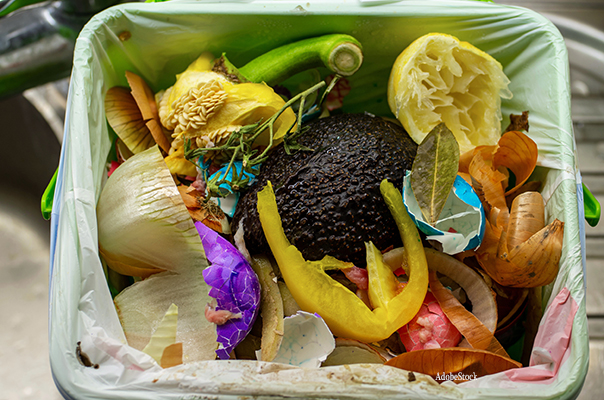
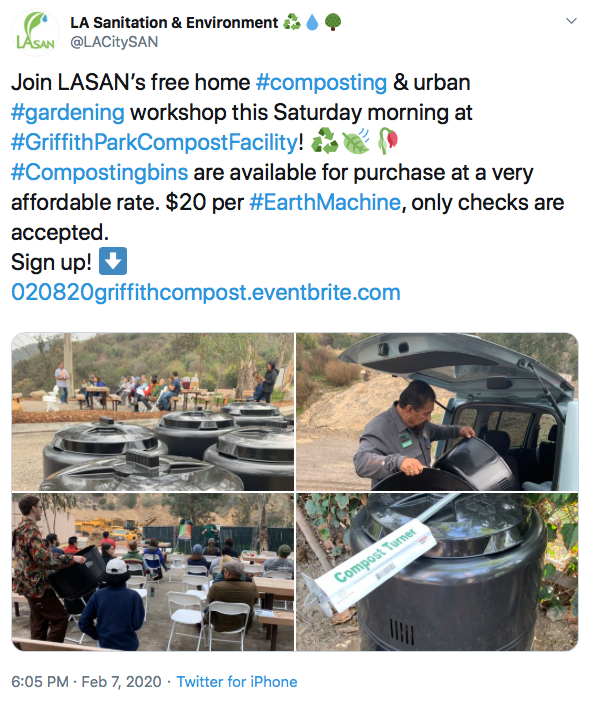
Let’s do the exact same for climate, nailing one component at a time. Home composting is ultra simple. Food scraps that we normally throw into the sink composter, get thrown into a covered plastic kitchen bin, that can be added to a larger yard or garage bin weekly or daily depending on how many are in our household.

It’s advised that once compost is tossed into the larger bin, that the heap should be turned once a week, and water added to speed up decomposition. It will take approximately one month for it to be ready to till into our yard and or forest soil. The breakdown of the larger garage or outdoor bin, should be one third green scraps — food scraps that include all foods, tea bags, coffee grounds and filter, egg shells, lint and grass trimmings — and two thirds brown scraps, made of leaves, twigs, shredded newspaper, and hay. The green scraps contain nitrogen, and the brown contain carbon. The ratio of one third green to two thirds brown is important.

According to Home Composting Made Easy, as much as thirty-five percent of our household waste can be reduced if we home compost. Waste management has been a thorny challenge during covid stay-at-home, so a reduction in the amount of waste to pick up will improve the well-being of these essential workers, conquering two challenges at the same time.

When home compost is added to the soil, the increase in nutrients enables the soil to sink more carbon. Further, the fungus and good bacteria found in the compost protects trees from deadly nematodes as well as other plants which increases the amount of carbon each can store. The compost nutrients nourish nature, enabling it to grow taller and fuller and in so doing, store that much more carbon.
Okay, let’s go! Can we all nail this in six weeks the way we accomplished covid facial coverings? Of course we can. I’ve been home composting since October 2019, and find that it’s a significant improvement in household waste management. I love how my kitchen garbage is so lean. I only need to empty once a month. Nothing stinky to worry about. I either recycle or compost, so the only garbage is plastic bag packaging, the kind that frozen vegetables are packed in. Good luck!🌱
© Copyright 2018 – 2020. ALL Rights Reserved.


 Climate Action Report