Tag: soil

Winter Activities for Kids | Climate Change

Washington (GGM) Analysis | January 31, 2021 by Catherine Zacuto, M. Ed.

It’s cold out there! You might be wondering about how to keep the kids busy, active, and productive. While remaining tucked away in the warm, cozy house, you can occupy them as they get ready to be Climate Superheroes! The hope of spring can inspire everyone to dig in and prepare for the near future, a future made better because you are helping fight climate change.

Continue reading “Winter Activities for Kids | Climate Change”

Compost & Carbon Sink| Climate Action

Washington (GGM) Analysis | December 10, 2020 by Noreen Wise

Compost is a big deal in the calculus for increasing carbon sink in our soil. It provides one of the most effective methods for the US public to assist with cutting carbon as deeply and swiftly as possible.

Continue reading “Compost & Carbon Sink| Climate Action”

The Soil Solution | Climate Change

Washington (GGM) Analysis | June 21, 2020

The many climate change solutions for lowering atmospheric carbon levels and keeping our children’s futures and lives safe, are all mapped out and well documented. The climate crisis is therefore more about the vast majority’s failure to implement, especially in America, rather than not knowing what to do to correct.

The most frustrating part about the startling failure to act, is how simple and easy the solutions are. Why so much resistance? Or is it more about apathy and procrastination?!

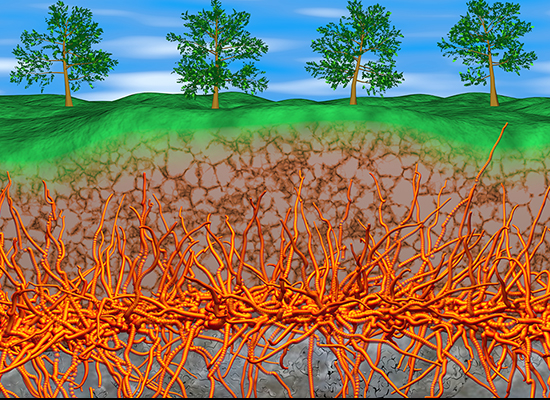
Let’s focus on the soil solution for a second. Soil stores 2x the amount of carbon than air and plants combined, British fungal network expert and author Merlin Shedrake outlines in his new book The Entangled Life, How Fungi Make Our Worlds, Change Our Minds & Shape Our Futures. Shedrake passionately opens reader’s eyes to the hidden fungal mycelium network below our feet, pointing out that fungi are the “guts of the earth.”

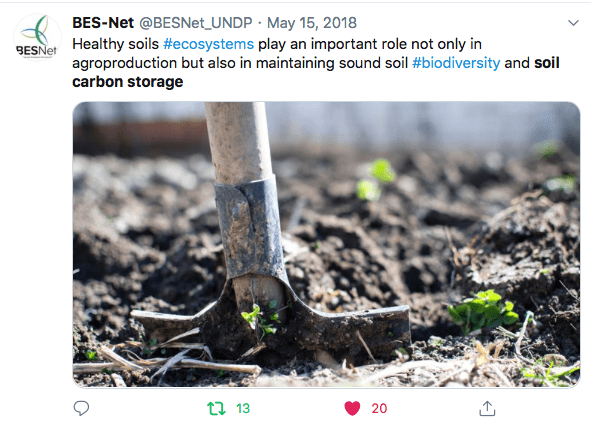
Toxic fertilizers and pesticides destroy these vital, ecosystem-saving mycelium networks. While home and community composting preserves, strengthens and grows these networks enabling that much more carbon to be stored in our soil, as well as simultaneously supporting the good health of nature above ground.

Increasing the amount of nature grown above ground, increases the number of mycelium networks below the surface. The strategy is thus very clear and straightforward.

  • Home and community composting is imperative in maintaining healthy soil, begin today if you haven’t already started
  • Grow far more nature above ground; trees as well as shrubs, flowers, ground cover and window boxes
  • Don’t use toxic fertilizers or pesticides, instead choose one of the many organic alternatives

That’s it! These easy life-saving and game-changing steps in soil health are this simple. Let’s all begin TODAY! No procrastinating. 🌱

Β© Copyright 2018 – 2020. ALL Rights Reserved.

Is Philadelphia an Eco-Action Model?

Washington (GGM) Analysis | June 19, 2020

The importance of nature as one of the vital solutions in lowering the global atmospheric carbon level has been documented. It’s now up to us to implement this strategy as quickly as possible. Yes, we must start sprinting so that we can not only save our children’s futures, but save their lives.

Eco-action, with multi-layer landscaping, green exterior walls and green roofs, has numerous benefits:

  • substantially increases carbon absorption if applied everywhere
  • lowers air pollution
  • improves mental health
  • beautifies city streets, public spaces, and neighborhoods
  • increases property values
  • is easy and inexpensive to execute
  • strengthens community ties

In search of an American city to serve as a model for other US cities, it was exhilarating to find major success in Philadelphia, PA, our nation’s birthplace. A very positive omen. A city we’re all closely connected with and that unites each of us through the Declaration of Independence and the US Constitution, that now shines like a beacon of hope and inspiration during this monumentally important climate action era.

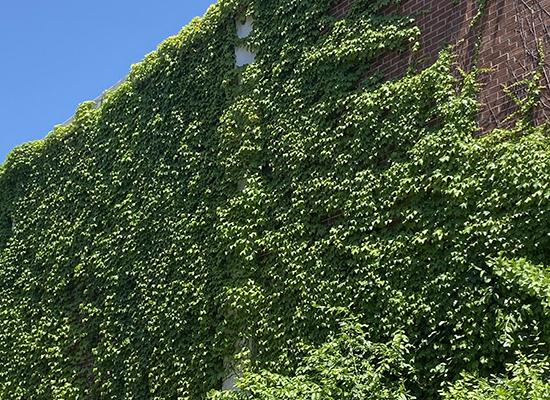
It appears that the genius behind the landscaping of Independence National Historical Park is very aware of nature’s role in solving the global climate crisis. Green walls, green roofs and layers of nature are budding everywhere. Not only in Independence Mall, but across the historic district, ivy on brick is a consistent theme.

Do you see the liberty bell in the left window?

Nature’s role in solving the global climate crisis is tied to the fungal networks below the surface, threading through the soil, connecting all plants through their roots. The more nature, the more fungal networks. The more fungal networks, the richer the soil. The richer the soil the more carbon storage. Oh, and soil stores twice as much carbon as nature.

It’s very clear that we have what it takes to overcome the looming climate crisis challenge. All solutions are readily available and easy to implement. Our greatest nemesis is procrastination. We all need to commit to acting on these solutions immediately.

Let’s GO! TGIF. Let’s start this weekend, which begins in just a few hours. Happy planting. 🌳

Β© Copyright 2018 – 2020. ALL Rights Reserved.

Powerful Impact of Meadows on Carbon Sink

Washington (GGM) Analysis | February 24, 2020 by Noreen Wise

Thousands of innovators acrossΒ the globe areΒ aggressively working to manufacture machines that will pull carbon out of the air and store it, or transform it into something useful. Recent news about Amazon committing $10B to combat climate change has created hope that some of these funds will be used to create innovative solutions such as carbon sequestration machines.

But we’re not there yet, so we have to maximize what’s currently at our disposal β€” nature.

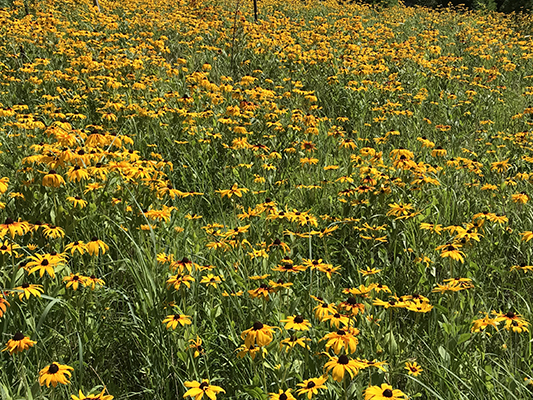
Planting trees is our number one priority. Β But, equally as important are meadows. Expansive landscapes of open fields that contain a variety of plants enable the funneling of carbon into their roots and trapping it in the soil where it will be safely stashed even when the roots die.

According to the Scientific American on sustainability, “Carbon Off-Set Cowboys Let Their Grass Grow”:

“The best way to maximize the amount of carbon that gets trapped underground is to maximize grass growth.”

Screen Shot 2020-02-24 at 2.24.22 PM.png

The fact that so many different types of botanic species grow in a meadow, and their roots all intertwine underground, appears to be why meadows store more carbon than tall and bushy shrubs, although they take up a lot more land. Once carbon is trapped underground, fungi feed off it, and according to the Scientific American, fungi are often consumed by microbes and worms which stabilizes the carbon.

Screen Shot 2020-02-24 at 2.28.47 PM.png

The western half of the country, with it’s massive open terrain, has a huge opportunity to maximize this option and help the United States take giant steps forward in cutting carbon. Apparently, a cap & trade program that reward ranchers and land owners is already underway. According to Civil Eats,Β Indigo Ag, a Boston-based agtech company, has raised $600 million from investors to help farmers sink one trillion tons of carbon on their property. Farmers are paid $15 per metric ton of stored carbon.

It’s exciting to see that the economy that led to our stratospheric carbon emissions rate, can be used to turn the catastrophe around and inspire land owners to reach for an opportunity to reduce carbon just as quickly and significantly.🌱

Β© Copyright 2018 – 2021. ALL Rights Reserved.