Tag: ESG

What People Are Saying About Mini Cooper Going Electric— Again

Washington (GGM) Analysis | August 5, 2020 by Sarah J. Kings

With all of the Nissan Leafs and Chevy Bolts on the road today, it may seem hard to remember when electric vehicles, EVs, were uncommon. However, only ten years ago, EVs were virtually unattainable to the average person. It was only in 2009 that the first major car manufacturer released over 500 EVs for private use— and no, it was not Tesla. It was BMW’s Mini Cooper!  

Though nearly ten thousand people signed up to lease Mini’s original EV– the Mini E– the vehicle was never intended for mass production. In March of 2020, Mini Cooper put more than just their toes in the water, with the release of their first real line of EVs: the Mini Cooper Hardtop SE. Starting at $29,900, this stylish and spunky roadster is one of the most affordable electric cars around.

Instagram – @pepperandgold 

According to Car and Driver, the car “has a 32.6-kWh battery pack and a single electric motor that produces 181 horsepower and 199 lb-ft of torque.” It has agile handling, a high-tech interior, and of course, the distinctive Mini aesthetic. Additionally, the SE sports an adjustable regenerative braking system, as well as a state of the art heat-pump that is 75% more efficient than traditional electric designs.  


The only real flaw in this adorable Mini is the range. The Mini Cooper SE has 110 miles of electric range, while competitors, like Hyundai or Kia have over 200 miles of range. On a positive note, the SE comes with a 3-prong charging cord that will fit into any standard outlet. In combination with the available at-home wallbox chargers and the increasing availability of public charging stations, this makes range less of an issue.   Plus, when using Fast DC Charging Stations, average users get an 80% charge in about 35 minutes.

Twitter – @MyUrbanCar

All in all, people are excited about the style, handling, and affordability of this Zero-Emission car. Pulling up in the Mini Cooper’s newly released SE will not disappoint!

Come back next Wednesday for more EV news!

Tl;dr

  • In 2009 Mini Cooper released 500 EVs for private usethe Mini E
  • The Mini E was never intended for mass production
  • In March of 2020, Mini Cooper released of their first real line of EVs: the Mini Cooper Hardtop SE
  • The base model starts at $29,900
  • The SE produces 181 horsepower and 199 lb-ft of torque
  • The SE has a state of the art heat-pump that is 75% more efficient than traditional electric designs
  • At home charging and the increase in public charging stations makes the 110 miles of electric range less of an issue

© Copyright 2018 – 2020. ALL Rights Reserved.

Raising Pro-Planet Pre-Teens

Washington (GGM) Analysis | July 14, 2020 by Sarah J. Kings

Whether you’ve been working on building a more sustainable lifestyle for a while or you are a total newbie, you don’t want to be the only one in your family running around your house turning off lights and pulling recyclables out of the kitchen trash. Everyone in the house needs to get involved. You may be thinking easier said than done, especially if your kids are a bit older.

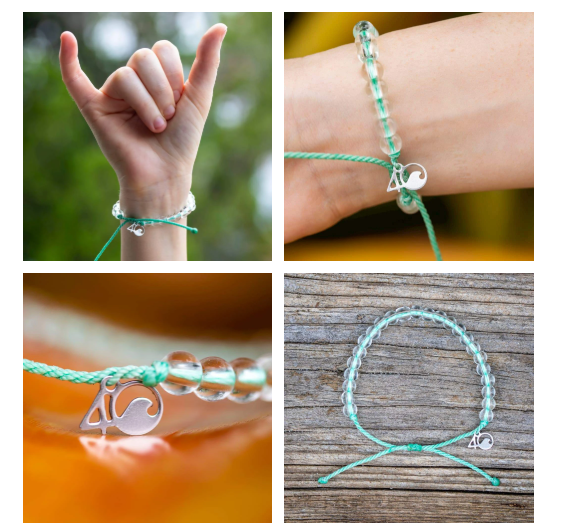
But I have good news! If you are raising a tween or young teen, it’s not too late to become a Pro-Planet Parent! Start small by making a few changes that shed light on specific causes and encourage eco-friendly behavior. Buying your son or daughter a 100% recycled 4Ocean bracelet is a great first step! 4Oceans is a global initiative dedicated to cleaning up the world’s oceans and spreading awareness. For each bracelet purchased, they promise to pull a pound of plastic out of our waters. Since 2017, they have removed 9,381,011 lbs of garbage from the ocean and coastline.

4Ocean – Loggerhead Sea Turtle Beaded Bracelet

Are you looking to make even more impact? Get your tween to look at thredUP for their next clothing purchase. This online secondhand store is a sustainable choice for the whole family. According to thredUP, the average article of clothing is worn only seven times before it is thrown directly into the trash. They claim that if everyone switched to secondhand purchases, we could collectively save 6 BILLION lbs of CO2 emissions per year.

Twitter – @thredUP

Another way to reduce your teen’s landfill waste and contribution to lowering CO2 emissions is to swap their favorite print magazine with the E-Copy. Doing so will help your young one realize that sustainable earth-conscious choices do not necessarily mean compromise. It can actually put some money back in their pockets! An annual online subscription to the popular magazine, Girl’s Life, is available on Barnes & Noble Nook for under $20!

Come back every Tuesday for more Eco-Friendly Parenting tips!

Twitter – @Girl’s Life Magazine

tl;dr

  • Become a Pro-Parent Parent: Help your young teen make earth-conscious choices
  • 4Ocean promises to pull 1lb of plastic out of the ocean for every bracelet sold
  • Since 2017, 4Ocean has removed 9,381,011 lbs of garbage from the ocean and coastline
  • Switching to secondhand clothing purchases, like thredUP, could save 6 BILLION lbs of CO2 emissions per year
  • Switching from print magazines to E-Copies lowers landfill waste and produces less CO2

© Copyright 2018 – 2020. ALL Rights Reserved.

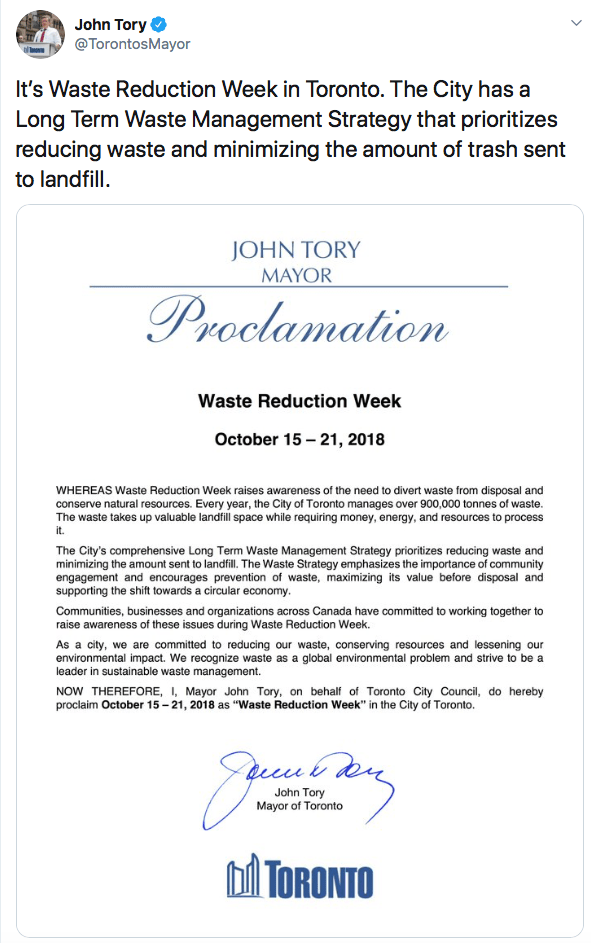
Toronto Is Far Ahead of Majority of American Cities | Waste Management

Washington (GGM) Analysis | June 27, 2020 by Noreen Wise

While quarantined in Toronto, Canada for 14 days — with only 4 days remaining, yay — I’ve been able to experience first hand how in sync Torontonians are with their advanced sustainability waste management processes. In less than two years, Toronto is on the brink of zero-waste.

Providing curbside pickup for kitchen scraps is the final step in closing the loop to create a circular economy. Twenty-two percent of all landfill waste is food waste, and thus preventable. Compostable food scraps is vitally important for strengthening soil nutrients in the gardens, parks and outlying farms that our American communities support.

On this city street here in downtown Toronto, there is a designated green bin on the sidewalk that’s contained inside a neat and tidy wooden fenced bin hub, that includes: a recycling bin, a garbage bin and a kitchen scraps bin. All the residents are onboard and drop off their kitchen scraps regularly. Kitchen scrap green bin pickup is every Friday morning, while garbage and recycling rotate every other Friday.

What I found so amazing about the bin hub on this Toronto city block, is that there is so little waste. One of the bins is a half-size bin. I’ve never seen a half-size waste bin in America, only overflowing jumbo-sized bins. This in itself is a snapshot of what our greatest challenge is. The American perception that our overflowing giant bins are normal and acceptable, while the rest of the world exists on the half-sized waste bin.

Stepping into this beautiful Canadian sustainability scene from America, feels like time travel, instantly arriving at what many climate focused communities are striving for. Toronto is already living America’s aspirations. Canadians make it look so easy. It basically is. Just do it, is all it takes. Why do so many in America believe, and make it appear, too difficult to conquer?

How long will it take America to close the loop and have kitchen scraps green bins on every street? Americans are quick at responding to prize offerings and rewards, perhaps the quickest in the world. Shouldn’t we move just as briskly to capture climate action rewards.

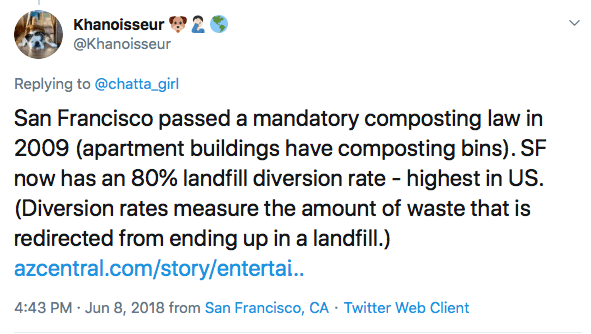
San Francisco began requiring mandatory composting back in 2009. And according to AZCentral, at the beginning of 2018, San Francisco had a landfill diversion rate of 80 percent, the highest in the country, with the goal of hitting 100 percent diversion rate by 2020. This is a sharp difference from Arizona’s 20 percent landfill diversion rate in 2018, and goal of 40 percent by 2020.

The bottomline is that the majority of countries in the industrialized world are lightyears ahead of America and on the waste management front. We can no longer rely on local, state and federal government to take the lead on these critical issues. We American citizens have to jump into the driver’s seat and just do it, just do what needs to be done so we can catch up and reverse global warming. Composting and strengthening our soil nutrient levels to maximize carbon absorption is an immediate next step for all American communities.

Lets GO! Just do it… TODAY.♻️

© Copyright 2018 – 2020. ALL Rights Reserved.

The Soil Solution | Climate Change

Washington (GGM) Analysis | June 21, 2020

The many climate change solutions for lowering atmospheric carbon levels and keeping our children’s futures and lives safe, are all mapped out and well documented. The climate crisis is therefore more about the vast majority’s failure to implement, especially in America, rather than not knowing what to do to correct.

The most frustrating part about the startling failure to act, is how simple and easy the solutions are. Why so much resistance? Or is it more about apathy and procrastination?!

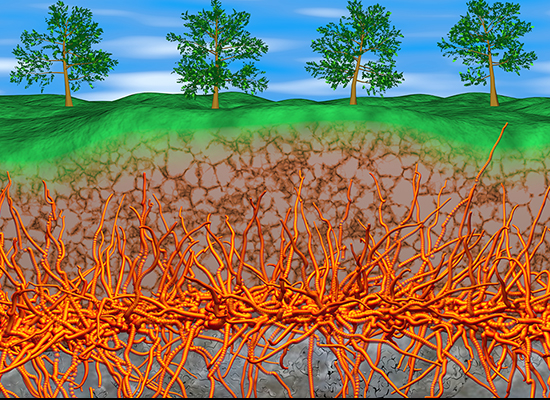
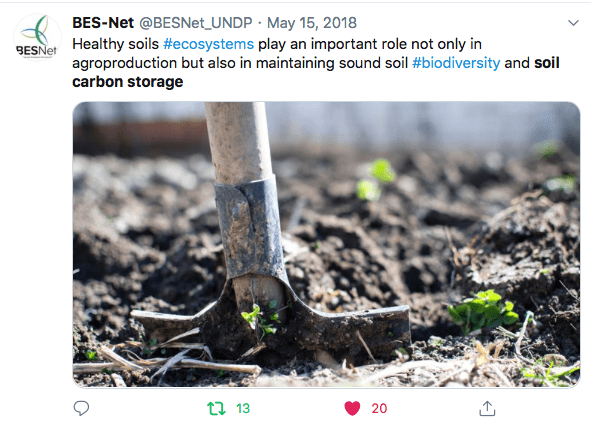
Let’s focus on the soil solution for a second. Soil stores 2x the amount of carbon than air and plants combined, British fungal network expert and author Merlin Shedrake outlines in his new book The Entangled Life, How Fungi Make Our Worlds, Change Our Minds & Shape Our Futures. Shedrake passionately opens reader’s eyes to the hidden fungal mycelium network below our feet, pointing out that fungi are the “guts of the earth.”

Toxic fertilizers and pesticides destroy these vital, ecosystem-saving mycelium networks. While home and community composting preserves, strengthens and grows these networks enabling that much more carbon to be stored in our soil, as well as simultaneously supporting the good health of nature above ground.

Increasing the amount of nature grown above ground, increases the number of mycelium networks below the surface. The strategy is thus very clear and straightforward.

  • Home and community composting is imperative in maintaining healthy soil, begin today if you haven’t already started
  • Grow far more nature above ground; trees as well as shrubs, flowers, ground cover and window boxes
  • Don’t use toxic fertilizers or pesticides, instead choose one of the many organic alternatives

That’s it! These easy life-saving and game-changing steps in soil health are this simple. Let’s all begin TODAY! No procrastinating. 🌱

© Copyright 2018 – 2020. ALL Rights Reserved.
Is Philadelphia an Eco-Action Model?

Washington (GGM) Analysis | June 19, 2020

The importance of nature as one of the vital solutions in lowering the global atmospheric carbon level has been documented. It’s now up to us to implement this strategy as quickly as possible. Yes, we must start sprinting so that we can not only save our children’s futures, but save their lives.

Eco-action, with multi-layer landscaping, green exterior walls and green roofs, has numerous benefits:

  • substantially increases carbon absorption if applied everywhere
  • lowers air pollution
  • improves mental health
  • beautifies city streets, public spaces, and neighborhoods
  • increases property values
  • is easy and inexpensive to execute
  • strengthens community ties

In search of an American city to serve as a model for other US cities, it was exhilarating to find major success in Philadelphia, PA, our nation’s birthplace. A very positive omen. A city we’re all closely connected with and that unites each of us through the Declaration of Independence and the US Constitution, that now shines like a beacon of hope and inspiration during this monumentally important climate action era.

It appears that the genius behind the landscaping of Independence National Historical Park is very aware of nature’s role in solving the global climate crisis. Green walls, green roofs and layers of nature are budding everywhere. Not only in Independence Mall, but across the historic district, ivy on brick is a consistent theme.

Do you see the liberty bell in the left window?

Nature’s role in solving the global climate crisis is tied to the fungal networks below the surface, threading through the soil, connecting all plants through their roots. The more nature, the more fungal networks. The more fungal networks, the richer the soil. The richer the soil the more carbon storage. Oh, and soil stores twice as much carbon as nature.

It’s very clear that we have what it takes to overcome the looming climate crisis challenge. All solutions are readily available and easy to implement. Our greatest nemesis is procrastination. We all need to commit to acting on these solutions immediately.

Let’s GO! TGIF. Let’s start this weekend, which begins in just a few hours. Happy planting. 🌳

© Copyright 2018 – 2020. ALL Rights Reserved.

It’s Friday | Time to Get A Solar Quote

Washington (GGM) Analysis | June 12, 2020 | by Noreen Wise

With many states now entering Phase 2 reopening, and corporations motivated to get employees back to work and make up for lost revenue, it’s the prefect time to click through and get a solar quote to take advantage of the many rebates, discounts and tax credits that are now available.

We should all be sprinting to lower our carbon footprints. Solar energy benefits are significant:

  • Substantial installation price drop in 2020
  • Reduce carbon footprint
  • Slash monthly energy costs
  • Increase home value
  • Store energy when you produce more than you use, earn income

During first four months of covid, we’ve seen how early action saves lives. So too with climate action. Fossil fuels are being phased out quickly. Investors are backing and growing renewables. There are plenty of incentives in most parts of the country, especially now more than ever, to jump in immediately, the same way we immediately purchased our face masks.

There’s no time left to be standing on the sidelines and wondering about whether to switch. Now’s the time to act. Click today and get a free quote and have a wonderful weekend.

Climate change is catastrophic and is expected to kill millions, but climate action is simple and easy. It just requires immediate action. Let’s save some lives and act TODAY.

Time to SPRINT!

© Copyright 2018 – 2020. ALL Rights Reserved.

Goodbye Liquid Laundry Detergent | Hello Sheets!

Washington (GGM) Analysis | June 10, 2020

Climate change consequences are catastrophic, but the solutions are simple and easy for the most part. So why aren’t we sprinting forward? There’s no time to waste. All we have to do is change our weekly habits. We’re already doing that with covid, so let’s keep up the momentum for change and include climate solutions in our routine.

We all bought facemarks in record time. Once we were told it was required, done. We have to do the same with many of our daily products, specifically laundry detergent, shampoo and conditioner. All three now come in bars, strips, pods and sheets. But this week, let’s focus on immediately eliminating liquid laundry detergent sold in the jumbo plastic jugs. There are multiple brands of alternatives.

Many of the name brands such as Tide, now offer laundry pods which eliminates plastic waste. But there are a plethora of new eco-brands that have eco-friendly product lines, many of which are manufactured by companies using solely renewable energy.

No time to waste. Let’s DO THIS! Make the change today. 🌎

© Copyright 2018 – 2020. ALL Rights Reserved.

Bartram’s Garden Philadelphia | Eco-Solutions

Washington (GGM) Analysis | June 9, 2020

Bartram’s Garden in Philadelphia, founded nearly 300 years ago by botany pioneer John Bartram, a plant hunter, who trekked through the American wilderness in search of unique species not native to Philadelphia, and returned with seeds, trimmings and saplings to plant on his farm, eventually acquired species from all thirteen colonies. Bartram’s garden now contains more species than any other botanical garden in North America, and is the longest surviving botanical garden on the continent.

In 1787, during the Constitutional Convention, when James Madison was trying to pass the US Constitution and the small states were at odds with the big states, after weeks of heated debates an immovable stalemate evolved. In apparent despair, Madison inspired several of the naysayers to journey with him to Bartram’s Garden to walk around for a few hours, believing nature to be a great cure, especially for troubled minds.

Madison’s stroke of genius worked. When they returned to cast their votes, several who had been at Bartram’s Garden changed their votes and the US Constitution was passed.

Bartram’s Garden | Photography by Noreen Wise All Rights Reserved

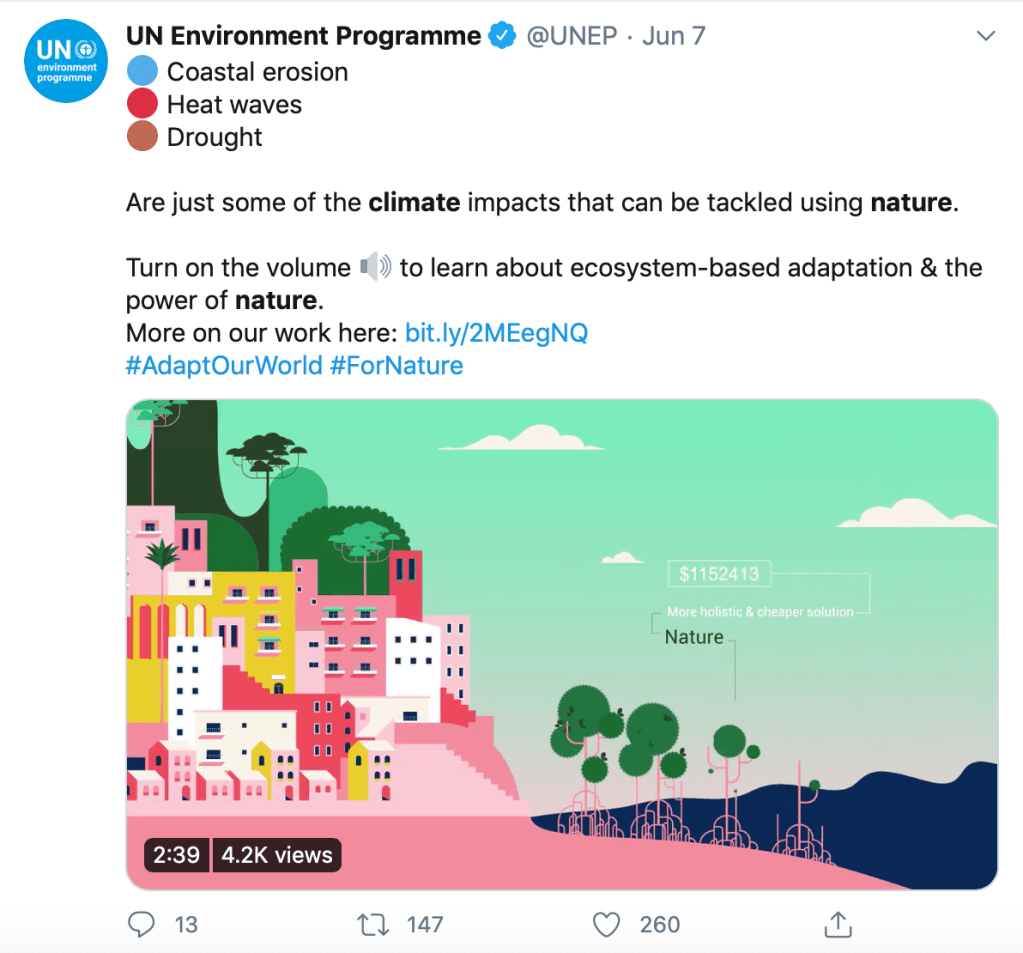
Nature is one of the most effective climate change solutions, and can successfully battle climate’s most vicious side effects. Scientists refer to nature’s positive impact on climate change as ecosystem based adaptation.

Spending a day at Bartram’s Garden over the weekend, made me feel as inspired as Madison must have felt back at the beginning in 1787. Extensive acres of layers upon layers of nature’s most wondrous species. What better way to cure such a destructive enemy than to beautify every inch of our landscapes with as much nature as possible. Come on, America, we can do this. We must begin today.

The layering of all different tree heights, shrubs, flowers, ivy, and ground cover, not only captures carbon, but captures and inspires the human spirit to respect and protect our vital resources and our children’s futures. 🌳

© Copyright 2018 – 2020. ALL Rights Reserved.
Social Distancing in Stores Is Harder Than We Think

Washington (GGM) Analysis | June 5, 2020 | by Noreen Wise

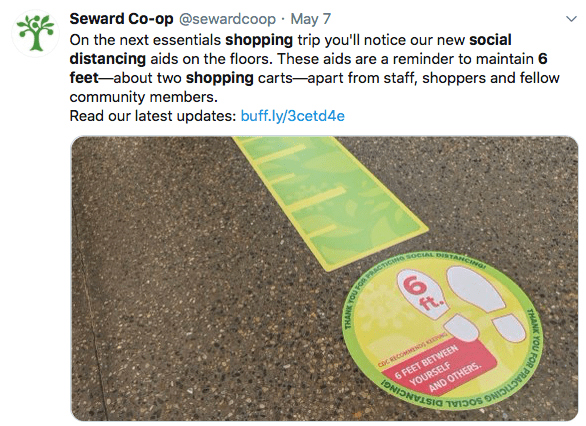
Most of us have the face masks and facial coverings down. I rarely see anyone without, except outdoors. But shopping in Whole Foods the other day was a huge wake-up call that it will be difficult to safely reach the other side of covid, when the vaccine is released next year, if we don’t think of better solutions for grocery shopping.

So many well-intentioned people completely zone-out in a grocery store aisle. Are grocery aisles even 6 feet wide? It doesn’t seem like they are. I plan to bring a measuring tape next visit so I can prove this. The biggest shock, were the two Whole Foods’ employees who totally stoked my fears that I would get covid if they couldn’t keep their distance. They must have a timed task list. I get it, the shopper who stands in front of the shelf where you want to quickly grab a product and just continues staring at shelf undecided. That same shopper is also oblivious to the fact that you’re waiting for them to move because you have to stand six feet away.

How about the woman who invaded my space in front of a fruit display because I was trying to keep my six feet distance from a nearby shopper. But this woman, saw an opportunity to maneuver in front of me and grabbed the item I was going to select. That’s not right. The weird part was that it didn’t seem like she did this intentionally, but rather it was if her thoughts were a million miles away and she was trying to bee-line over to what she needed because she was in a rush and her mind was elsewhere. Regardless, it still presents a health risk.

The biggest shock came when the Whole Foods employee decided to open a register when the line became so long. With a long bank of approximately 10-12 registers with only two in use, she opened the register right next to the checkout lane I was in which meant her customer was only inches away from me while we both checked out. I quickly moved to stand 6 feet away, but neither the employee nor the customer seemed to be aware that we were all too close and the cashier should have opened a register further away.

Next time I’ll be more vocal and go straight to customer service and ask for intervention. I now view this experience as a trial run that revealed the short comings of which there are many. This is not a time to be quiet about important issues like covid. The pandemic is going to be around for the next 12 months. If we want to save lives, including our own, we have to speak up and give the store the opportunity to address the situation.

I just read in Bloomberg News that there are now social distancing bracelets that beep if we get too close. Buzz-off, an italian start-up, is one example. We all need these. Again, it’s about saving lives.

Good luck out there! 😷

© Copyright 2018 – 2020. ALL Rights Reserved.

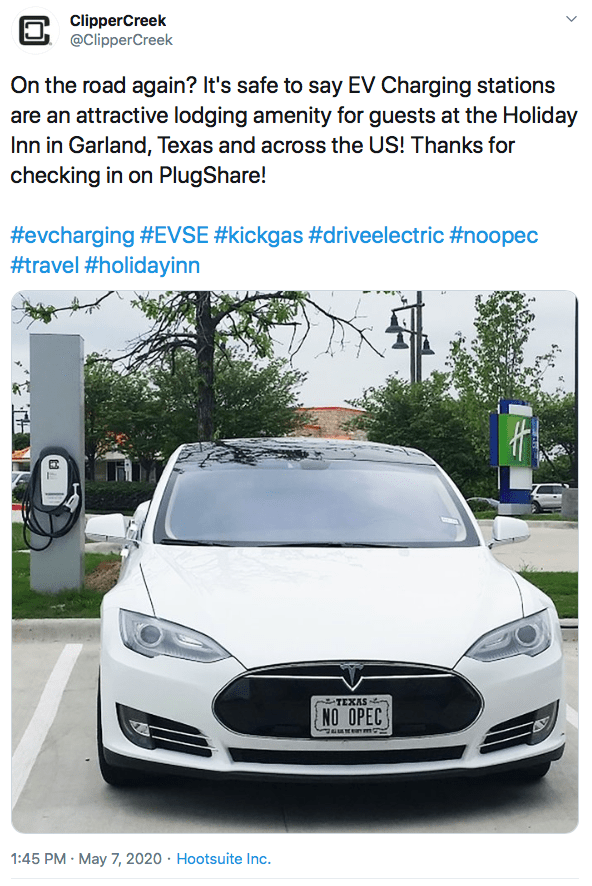
Three States with the Most Charging Stations | Can You Guess?

Washington (GGM) Analysis | June 4, 2020 | by Noreen Wise

After three months of staying at home, (and happy to do so), I must admit that I’ve never been so eager to plan a road trip this summer. Public transportation is still quite worrisome, but driving is an ideal option for social distancing while traveling. In fact, I’ve determined it’s the safest transportation option available.

With so many restaurants offering curbside pickup, and the empty highways luring me to take advantage of this unique opportunity, it’s exciting to ponder which destinations to add to my list. This may be the best summer ever to travel across country?

Is my exuberance getting the best of me?

Perhaps, but I was excited to read today that the three states with the most EV charging stations are:

  • California
  • Texas
  • Florida

Texas surprised me, actually. I had no idea that Texans were buying EV’s, but apparently they are. Excellent. Here’s a link that identifies where all the EV charging stations are located across America.

Facial coverings are needed at gas pumps and rest stops. Interestingly, I’m finding that it’s very easy to forget we’re in the middle of a pandemic when I travel. I better follow the great example I’ve seen and hang a face mask from the rearview mirror so I don’t get stuck without one. Happy travels. 😷

© Copyright 2018 – 2020. ALL Rights Reserved.
.