Category: Climate Action

How to Talk with Your Kids About Climate Crisis

Washington (GGM) Analysis | August 11, 2020 by Sarah J. Kings

It is undeniable, climate change is here, and it poses very serious challenges for the world’s population.  There are weather changes, health implications, and economic impacts of this complex crisis. If you’re a pro-planet parent, you may be struggling with how to talk to your children about these issues. After all, this topic can be overwhelming and even depressing for adults.  It is hard to know what is too little and what is too much in regards to engaging your children on this subject.

Twitter- @MPRnews

First, you must remember that this isn’t your childhood.  Information isn’t only delineated from your parents, your teacher, and a neighborhood no it all.  Kids have access to information- whether accurate or not- at the touch of their fingertips.  Chances are, your child has already done some research on this topic using their tablet or smartphone.  This is why your first step in broaching this topic should be to find out what your child already knows– or what they think they know– about climate change.  Be sure to talk to them about vetting resources and how to fact check, so that they won’t be misled. Explain why the Environmental Defence Fund, EDF, or the Environmental Protection Agency, the EPA are reliable resources, while Facebook or Instagram may not be.

If your kids are too young to navigate the EDF or EPA, maybe let them know that you can be their resource for information until they are a bit older.

After finding out what your child already knows, and empowering them with the ability to find reliable information, gauge their feelings.  This can be a scary subject, and your child may have some really tough emotions to work through.  Let them know that you are here for them and that they are not alone.  Tell them that there are agencies all over the planet working tirelessly to solve this problem.

Twitter- @myonlinesch

Remind them that the climate crisis is a man-made problem, and there will eventually be a man-made solution.  Explain that every choice they make can be a choice to help save Mother Nature.  Encourage your child to conserve energy, consume less, and re-use or re-purpose items whenever possible.  Every time you or your child turns off a light when they leave a room, or drops a can into the recycling bin, congratulate them!  Make them a part of your eco-friendly routines, and most importantly, ask them how they would like to help.

By merely speaking to your children about the climate crisis, you are preparing the next generation for what’s to come.  Who knows, you may be raising the next Greta Thunburg or Jane Goodall.

Come back every Tuesday for more Eco-Friendly Parenting tips!

Tl;dr

  • There are weather changes, health implications, and economic impacts of this complex crisis
  • Talking to your children about these issues can be tough
  • Chances are, your child has already done some research on this topic using their tablet or smartphone
  • Find out what your child already knows– or what they think they know– about climate change
  • Talk to them about vetting resources and how to fact check
  • The Environmental Defence Fund, EDF, and the Environmental Protection Agency, the EPA are reliable resources
  • Gauge their feelings
  • Remind them that they are not alone: there are agencies all over the planet working tirelessly to solve this problem
  • Encourage your child to conserve energy, consume less, and re-use or re-purpose items whenever possible
  • Make them a part of your eco-friendly routines, and most importantly, ask them how they would like to help

© Copyright 2018 – 2020. ALL Rights Reserved.

Why You Need to Know About the Launch of The Wonderful Wine Co.

Washington (GGM) Analysis | August 6, 2020 by Sarah J. Kings

This time last summer, your evening plans may have included slipping on stilettos to meet up with a few friends at a new roof-top bar or rocking your favorite fedora at a neighborhood block party. As Friday quickly approaches, we know swanky bars and big parties are out of the question, but that doesn’t mean you have to let your summer slip away. You can uncork a bottle of wine on your back porch with your neighbor– six feet away, of course– and toast to Mother Nature!

Yes, that’s right; there is a wine that is actually doing something for the environment. In June of 2020, Winc launched a totally vegan and oh so sustainable line of wine. It’s called The Wonderful Wine Co., and people are loving it!  

Twitter – @helloboxes

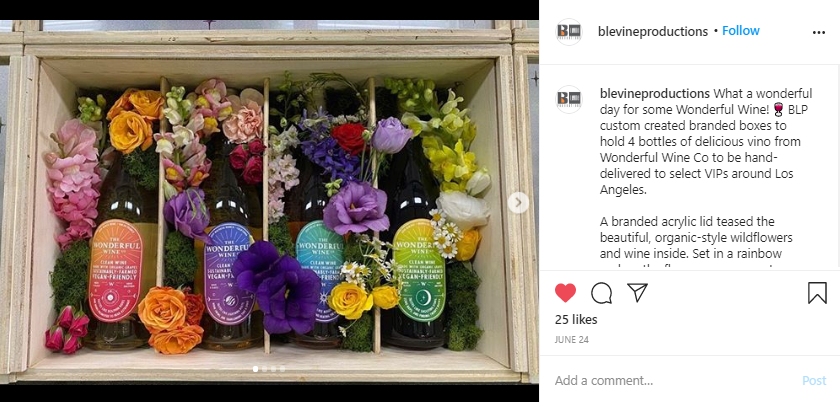
The Wonderful Wine Co. is dedicated to the wellness of the planet and the wellness of its customers. All of the grapes are derived from organic vineyards, and no added chemicals or added sugars are used in the process. Unlike most wine available, The Wonderful Wine Co. is all vegan. This means that the ground-up bone, casein, milk, and fish bladders that sneak their way into your typical Rosé, won’t be found here.

More than simply better for you, this wine is better for the planet. The ingredients, the packaging, how it is shipped, and even the bottle itself are meticulously designed with Mother Nature in mind. Wonderful Wine uses a special lightweight glass bottle that requires 20% less energy and 12% less water in production, which reduces carbon emissions by 27%. They also have reduced landfill contributions and deforestation by eliminating the trash producing polylaminate capsule altogether and using an all-natural biodegradable cork. Additionally, the box the wine is housed in is 100% recyclable and 95% compostable.

With four delicious selections coming from non-GMO vineyards in Argentina, France, and California, there is a delicious and sophisticated option for any occasion. For a sustainable sip of summer, pour yourself a glass of The Limited Edition Orange wine. With notes of citrus and white peach and a touch of honeysuckle, you will know why they call it Wonderful Wine.

Instagram – @blevineproductions

Come back every Thursday to learn more about the role veganism plays in combating climate change!

Tl;dr

  • Winc launched The Wonderful Wine Co., a vegan and sustainable line of wine
  • The grapes are derived from organic vineyards
  • No added chemicals or added sugars are used in the process
  • Most other wine includes ground-up bone, casein, milk, and fish bladders
  • Wonderful Wine uses a special lightweight glass bottle that reduces carbon emissions by 27%
  • They reduced landfill contributions and deforestation by eliminating the polylaminate capsule and using an all-natural biodegradable cork
  • The box is 100% recyclable and 95% compostable

© Copyright 2018 – 2020. ALL Rights Reserved.

What People Are Saying About Mini Cooper Going Electric— Again

Washington (GGM) Analysis | August 5, 2020 by Sarah J. Kings

With all of the Nissan Leafs and Chevy Bolts on the road today, it may seem hard to remember when electric vehicles, EVs, were uncommon. However, only ten years ago, EVs were virtually unattainable to the average person. It was only in 2009 that the first major car manufacturer released over 500 EVs for private use— and no, it was not Tesla. It was BMW’s Mini Cooper!  

Though nearly ten thousand people signed up to lease Mini’s original EV– the Mini E– the vehicle was never intended for mass production. In March of 2020, Mini Cooper put more than just their toes in the water, with the release of their first real line of EVs: the Mini Cooper Hardtop SE. Starting at $29,900, this stylish and spunky roadster is one of the most affordable electric cars around.

Instagram – @pepperandgold 

According to Car and Driver, the car “has a 32.6-kWh battery pack and a single electric motor that produces 181 horsepower and 199 lb-ft of torque.” It has agile handling, a high-tech interior, and of course, the distinctive Mini aesthetic. Additionally, the SE sports an adjustable regenerative braking system, as well as a state of the art heat-pump that is 75% more efficient than traditional electric designs.  


The only real flaw in this adorable Mini is the range. The Mini Cooper SE has 110 miles of electric range, while competitors, like Hyundai or Kia have over 200 miles of range. On a positive note, the SE comes with a 3-prong charging cord that will fit into any standard outlet. In combination with the available at-home wallbox chargers and the increasing availability of public charging stations, this makes range less of an issue.   Plus, when using Fast DC Charging Stations, average users get an 80% charge in about 35 minutes.

Twitter – @MyUrbanCar

All in all, people are excited about the style, handling, and affordability of this Zero-Emission car. Pulling up in the Mini Cooper’s newly released SE will not disappoint!

Come back next Wednesday for more EV news!

Tl;dr

  • In 2009 Mini Cooper released 500 EVs for private usethe Mini E
  • The Mini E was never intended for mass production
  • In March of 2020, Mini Cooper released of their first real line of EVs: the Mini Cooper Hardtop SE
  • The base model starts at $29,900
  • The SE produces 181 horsepower and 199 lb-ft of torque
  • The SE has a state of the art heat-pump that is 75% more efficient than traditional electric designs
  • At home charging and the increase in public charging stations makes the 110 miles of electric range less of an issue

© Copyright 2018 – 2020. ALL Rights Reserved.
How to turn Plastic Free July into Plastic Free Forever!

Washington (GGM) Analysis | July 31, 2020 by Sarah J. Kings

We encounter so many choices throughout the day— cream or sugar, french fries or salad, paper or plastic.  No matter how small the decision may seem, each choice is an opportunity to vote.  Each and everything you do as a consumer is significant; it tells corporations and businesses what is important to you, what you are willing to compromise on, and what you are unwilling to be a part of.

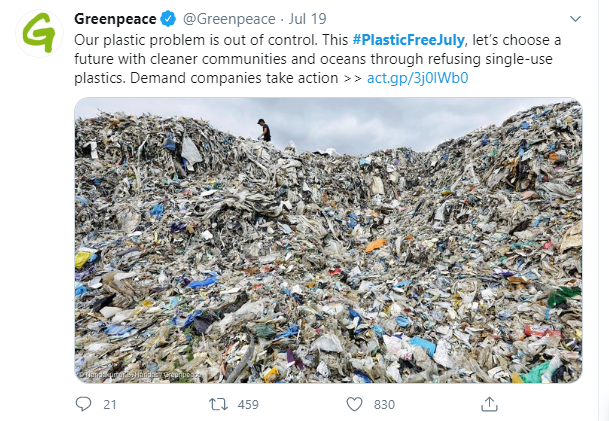
If you participated in Plastic Free July this summer, your vote against plastic waste was cast 30 times in a row!  You, along with 250 million others, told the world that it’s time to ditch destructive single-use plastics.  According to the  2019 Annual Report produced by the Plastic Free Foundation, in July alone, this initiative was responsible for avoiding 825 million kg of plastic waste.  With the upward trend in membership and participation of this non-profit group, the 2020 report should show an even greater impact!

This image has an empty alt attribute; its file name is noiWDMjQw0d1KsqS0-ozgMKOr9LwWcN4cB5o4qFWg0_F_Hm8CYoFcm7e-Kb2z7t09QDe0kn0tmRPuyGjjasE39IAG0gf6XBZzk1Z1rMgFq-uHIZBKh1wx1aVR5yMLmhRvq72Y8_F

Twitter – @Greenpeace

Now that it’s August, let’s keep the momentum going. Last year, 16% of Plastic Free July participants were inspired to continue their efforts throughout the year. Keep making the decision to choose sustainable and reusable bags, cups, and straws, and that percentage is sure to rise.

Visit the Plastic Free Foundation’s What Can You Do page for more information on how to change up your routine for the better! Whether you switch up the type of laundry supplies you buy, or you simply buy a bamboo toothbrush, let people know! Tweet your successes with hashtags that promote sustainability and a plastic-free lifestyle. Doing so will motivate you to keep going, and it will inspire others to do the same.

This image has an empty alt attribute; its file name is BqZbpUX9X3dCJrUYBrDDFyuUquERqIylpzNrPt9aMzBVDPl3r-l_5ANhWcns38xoOnhg7ltqFbjjVdFPvA8XPW8G9V9G9Jp8Dx6YAwIK3N54n6wvUWnWVBgie4y0FV9YKAM_Jok_

Instagram – @zerowastedoc

Tl;dr

  •  Everything you do as a consumer is significant
  • In July 2019, the Plastic Free Foundation was responsible for avoiding 825 million kg of plastic waste
  • 250 million people participated in Plastic Free July in 2019
  • 16% of participants continued on with plastic-free lifestyle changes throughout the year

© Copyright 2018 – 2020. ALL Rights Reserved.

10 Amazing Female Vegan Mega-Stars

Washington (GGM) Analysis | July 30, 2020 by Sarah J. Kings

Everywhere you go, you are seeing more and more about veganism and plant-based diets.  Whether you’re walking down the street and see a billboard for Burger King’s Impossible Whopper, or you’re perusing down the “Plant-Based Protein” aisle in Target, it’s hard to ignore that times are changing. Veganism is here, it’s becoming more accessible, and it’s not going anywhere.  As inhabitants of this earth, we should all be excited by this.

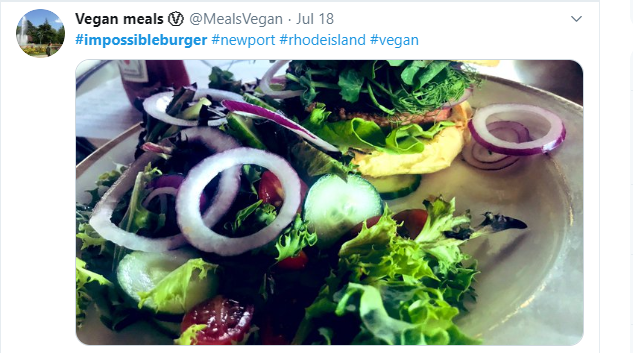
Twitter – @MealsVegan

The vegan lifestyle combats animal cruelty, disease, and of course the climate crisis. Eliminating animals and animal products from your diet significantly reduces water consumption, land usage, and CO2 emissions.  According to the People for the Ethical Treatment of Animals, PETA, 51% of global greenhouse gas emissions are caused by animal agriculture!

If that doesn’t inspire you to make a meatless change, maybe this will.  Here is a list of 10 Amazing Female Mega-Stars who are completely committed to veganism!

  • Miley Cyrus – Singer, song-writer, & actress
  • Alicia Silverstone – Actress, Clueless sensation 
  • Natalie Portman – Actress, activist, & Harvard Graduate 
  • Taraji P. Henson – Actress & author 
  • Gisele Bundchen – Supermodel
  • Mayim Bialik – Actress & neuroscientist 
  • Kat Von D – Tattoo Artist & entrepreneur 
  • Mya – Singer, producer, & actress 
  • Ruby Rose – Model & actress
  • Beyoncé – Singer, The Queen B

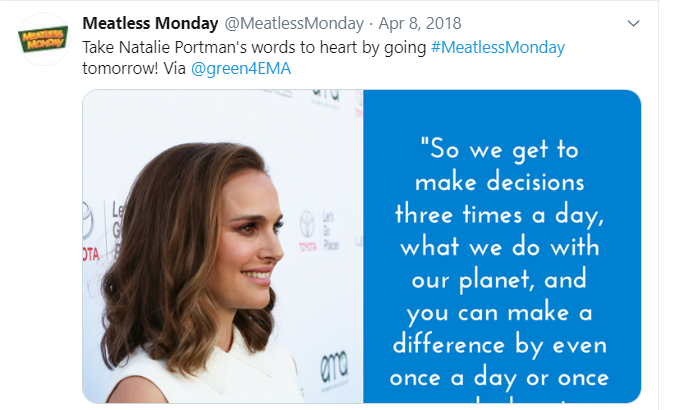
Twitter – @MeatlessMonday

Not only are these stars plant-based, but they are making big strides in the vegan community!  Alicia Silverstone, for example, has been vegan since 1998.  Silverstone is the co-creator of myKind Organics, a line of vegan vitamins. Natalie Portman produced the film, Eating Animals, in 2017, and she regularly speaks out on animal rights and environmental issues. And we all remember how Beyoncé encouraged her fans to become vegan by offering free concert tickets to meatless converts.

Whoever your favorite celebrity is on this star-studded list, they would all agree, taking a chance on a plant-based diet is the way to go!

© Copyright 2018 – 2020. ALL Rights Reserved.

3 Must Haves for New School Year | Eco-Friendly Parenting

Washington (GGM) Analysis | July 27, 2020 by Sarah J. Kings

As August nears, so do thoughts of sending your children back to school.  If it were any other summer, you would be budgeting for clothes, scheduling haircuts, and debating with your kids about why they don’t need the latest Louis Vuitton Supreme sneakers.  Instead, due to the global pandemic, you’re reading and re-reading governor briefings and state guidelines for re-opening in the fall and wondering about the efficacy of remote learning.

No doubt, things will be different this school year. Your child may return to school in the fall using a hybrid model, or they might be 100% remote.  No matter what avenue is taken, you still need to prepare.  As an earth-conscious parent, we know how important it is that your back to school list is sustainable. 

We talk about plastic a lot, but one of the biggest offenders of the climate crisis is our paper consumption.  According to the Environmental Professionals Network (EPN), each person in the U.S uses 749 lbs of paper per year, resulting in massive deforestation. Adding insult to injury, so much of this paper does not get recycled.  Paper waste makes up 26% of landfills, resulting in the production of methane, “greenhouse gas with 23 times the heat-trapping capacity of carbon dioxide.” Because of this, the reMarkable 2 should be the first item on your shopping list. 

This next generation “paper tablet” is wildly versatile.  It looks, feels, and even sounds like a pencil and paper, offering your child the creative experience they are used to.  It is ultra-lightweight and compact, and all of your child’s notes will be automatically uploaded to the cloud.  So, finally, everything will be organized, and nothing will get lost!

Twitter – @Ayo_d10

The next item of the list, of course, is cellphone related.  Nowadays, if you have a school-age child, the chances are that they have a mobile device.  Without a doubt, they will be looking for a new case for the start of the school year.  For this request, consider buying your young one a Pela phone case.  Pela cases are nonsynthetic and are Certified Climate Neutral.  These stylish accessories are plant-based and made from recycled materials, making them completely biodegradable and compostable!  With tons of styles that fit AirPods, iPhones, Samsungs, and Pixel phones, your child will be excited to make this eco-friendly switch.

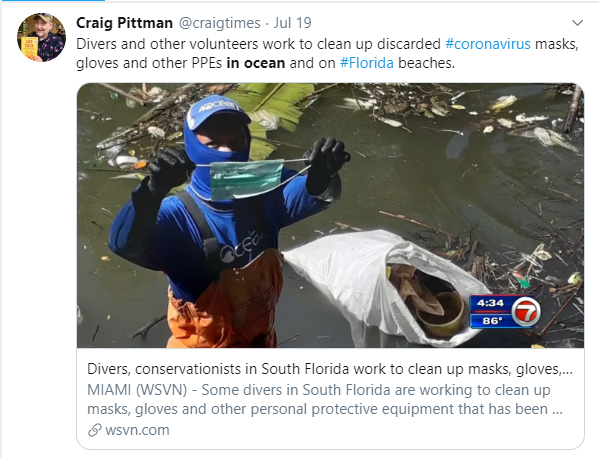
This last item was definitely not on your back to school list last year: a face mask.  Disposing of single-use face masks is posing a real threat to marine life.  To combat this dangerous trend, try switching to a reusable mask made from upcycled materials.  Lumily is an ethical brand that focuses on sustainability as a part of their business model.  They offer a variety of CDC certified reusable masks made from 100% responsibly sourced cotton.  An added bonus: Lumily will donate a mask to someone in an underserved or vulnerable community for each mask purchased!

Twitter – @craigtimes

With these three small changes to your back to school shopping, you and your kids can make a big impact on the globe!

Come back every Tuesday for more Eco-Friendly Parenting tips!

Tl:dr

  • Concerns about COVID-19 will most likely affect the way your child returns to school in the Fall
  • Try to keep sustainability at the forefront of thought when curating your child’s back to school list
  • Each person in the U.S uses 749 lbs of paper per year
  • Paper waste makes up 26% of landfills, resulting in the production of methane
  • Methane in landfills has 23 times the heat-trapping capacity of carbon dioxide
  • Try limiting your family’s paper waste with the purchase of a reMarkable 2
  • Try replacing plastic phone cases and AirPod cases with a compostable Pela case
  • Face masks, gloves, and other PPE are posing a major threat to marine life
  • Purchase a  CDC certified reusable Lumily mask, made from 100% responsibly sourced cotton

© Copyright 2018 – 2020. ALL Rights Reserved.


Is Elon Musk Mother Nature’s New Price Charming?

Washington (GGM) Analysis | July 23, 2020 by Sarah J. Kings

In March of 2020, Tesla CEO, Elon Musk, announced the search for the perfect location for his newest factory. Not unlike Prince Charming’s country-wide invitation to the castle ball in Cinderella, people far and wide waited in anticipation over Musk’s Choice. July 22nd, a statement was released, saying that the new facility will be built in Austin, Texas.

Twitter- @tedcruz

Unlike other car companies, Tesla far outperformed in earnings despite the global pandemic, reporting four consecutive profitable quarters. This boost for Tesla means a boost for the economy and a major boost for the planet.

Musk announced that the Cybertruck factory will be open to the public. With walking trails, bike paths, a boardwalk, and fish-filled streams, he described the park-like facility as an “ecological paradise.” This new destination will surely bring tourism dollars, but the real economic growth will come from the 5,000 new jobs needed at the site.

The economic buzz surrounding Musk’s latest venture is exciting, but the real news lies in the cars! Tesla promises that from the facility will come four new vehicles, the long-awaited Cyber Truck, the Tesla Semi, the Model Y, and the Model 3. The addition of these new EVs, along with Tesla’s unexpected boost in earnings, means more electric vehicles on the road. Considering the fact that every gallon of gasoline burned creates about 8,887 grams of CO2, this is very big news for Mother Nature!

Tl;dr

  • On July 22nd, 2020, Elon Musk announced that the new Tesla factory will be built in Austin, Texas
  • Tesla far outperformed in earnings, reporting four consecutive profitable quarters
  • The facility will be a park-like destination boasting walking trails, bike paths, a boardwalk, and fish-filled streams
  • The new Tesla factory will create at least 5,000 new jobs 
  • The facility will produce a Cyber Truck, the Tesla Semi, the Model Y, and the Model 3

© Copyright 2018 – 2020. ALL Rights Reserved.

Top 3 Vegan and Eco-friendly Solutions to the Planet’s Period Problem

Washington (GGM) Analysis | July 16, 2020 by Sarah J. Kings

For many of us who menstruate, a visit from Aunt Flo means a week’s worth of pads, tampons, and pantiliners paired with a tub of Ben & Jerry’s and a sprinkling of Midol.  Between cramps, bloating, headaches, and checking for leaks, we might be overlooking one major aspect of our periods.

Plastic.

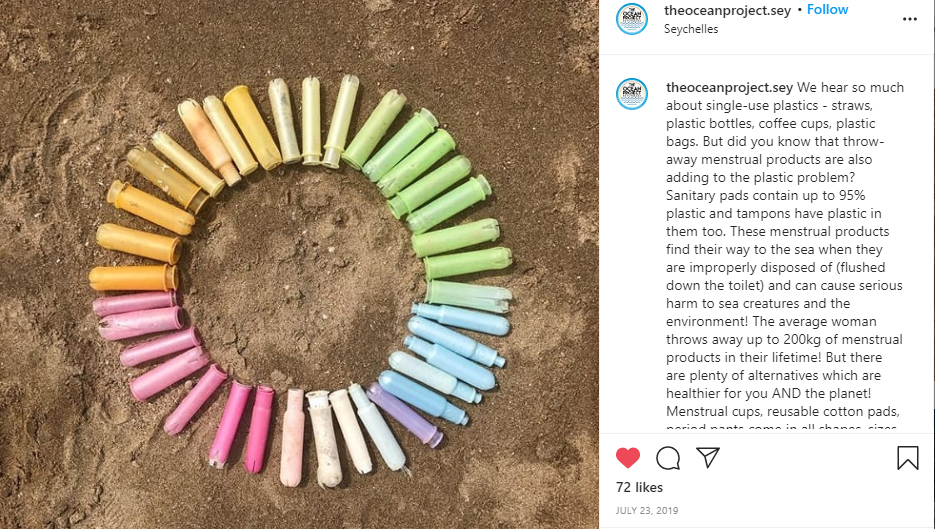
Traditional period products are loaded with plastic.  Wrappers, applicators, leak guard liners, and even the products themselves have plastic interwoven in the fibers.  These tiny applicators may not seem like much, but they add up.  According to National Geographic, Americans purchase 5.8 billion tampons annually.  The global number is a staggering 17 billion 400 million!  Even worse, the plastic in period products cannot be recycled, as they are considered medical waste— this means that these products ultimately end up in landfills and oceans.

Instagram– @theoceanproject.sey

If you are looking for a vegan and planet-friendly way to reduce the negative impact of single-use plastics during your period, don’t stress. You have 3 easy sustainable options! You can try reusable pads, menstrual cups, or period panties. Throughout my last three cycles, I decided to give each a try. I purchased BugaluBaby Bamboo Cloth MenstrualPads, an OrganiCup, and a couple of pairs of Thinx underwear.

I found BugaluBaby on Etsy.  I’ve never been big into pads, but these pads come in a variety of fun prints, made with bamboo, and come with a handy “wet bag” for convenience.  They are also easy to wash and are very cost-effective, costing only $25 for a pack of 9. 

Thinx underwear boasts a similar idea, but it feels less like a pad.  In my experience, you can wear one pair throughout the day while still feeling clean and dry.  This option works and works well, but it is a little less cost-friendly, costing between $24-$39 per pair. 

Lastly, the OrganiCup is a soft, flexible, reliable option that comes in a variety of sizes.  For those of us who are comfortable with insertable sanitary items, this is a great option.  It is incredibly sustainable and cost-effective.  One OrganiCup lasts two years, and costs only $28!  All three products have their consumer perks, and most importantly, they are vegan and pack a punch in the fight against the climate crisis!

Twitter – @Thinx

Come back every Thursday to learn more about the role veganism plays in combating climate change!

Tl;dr

  • Over 17 Billion tampons flood landfills and oceans each year
  • The plastic in pads, tampons, and liners are a major contributor to the climate crisis
  • Sustainable vegan period options DO exist
  • If you’re looking for an eco-friendly change, try  BugaluBaby Bamboo Cloth MenstrualPads, an OrganiCup or Thinx underwear

© Copyright 2018 – 2020. ALL Rights Reserved.


Tulsa and Tesla: Newest Battleground in EV Fight

Washington (GGM) Analysis | July 15, 2020 by Erika Browning

In 1901, oil was discovered in Tulsa—the Red Fork area to be exact, which is where my grandfather lives to this day. Within a short five years, Tulsa was declared the “Oil Capital of the World”. This title has been worn proudly by this incredible little city for well over a century. It’s a source of pride that locals have rigs on their land or receive mineral rights for oil supplies.

Beyond Tulsa’s history, its present is also wrapped up in oil. Conoco Phillips is headquartered just a short 45 minutes away in Bartlesville. Oil giants like Waite Phillips, and William Skelly made astronomical amounts of money off the oil that sits underneath the city. When oil prices dip, the effects are felt economically by thousands of Oklahomans. Financial investments depreciate, jobs are on the cutting board, and families worry about paying bills. And that’s just a threat that can be seen coming—let alone when an unforeseen shock to the system occurs. The latter effect was painfully felt when my husband’s company laid off a significant number of its workers during the beginning of the COVID-19 crisis. This is a company that hasn’t had such a layoff in its entire 100 years.

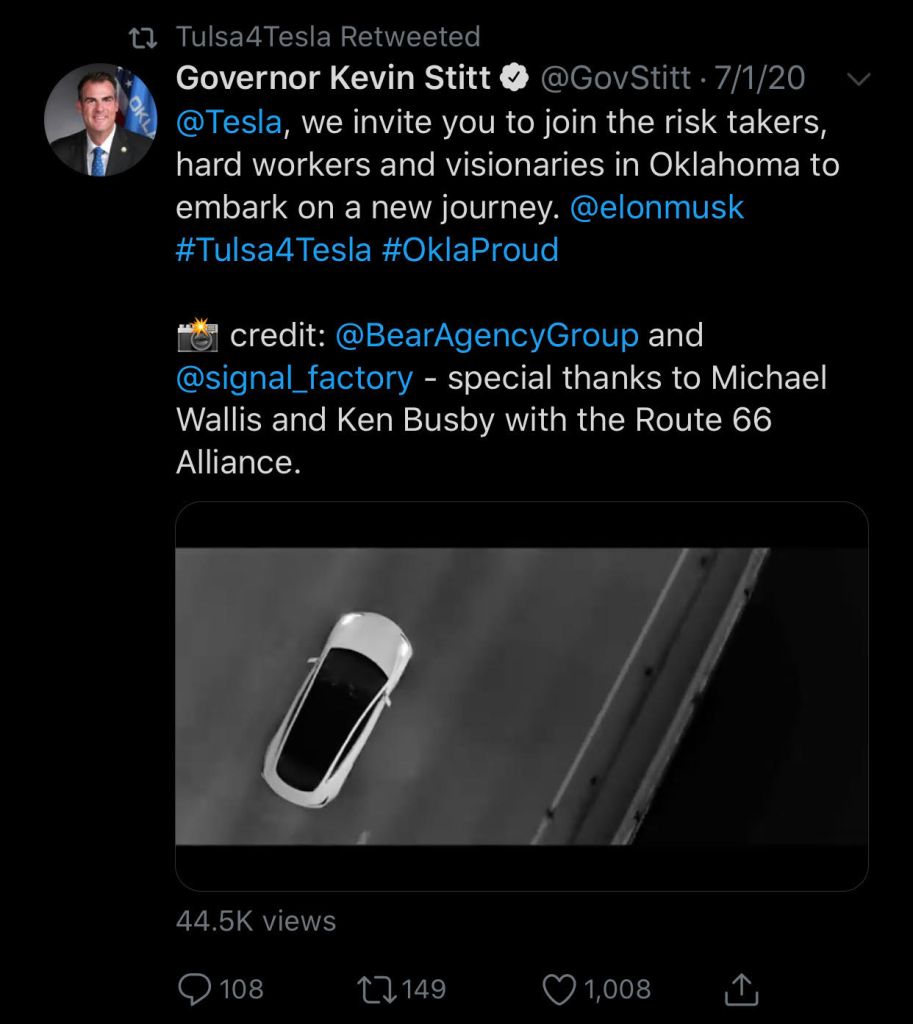
Twitter – @GovStitt

Despite its reliance on oil, Tulsa is also a thriving, progressive city. Citizens are constantly looking for ways to improve the quality of life. I often call Tulsa “my little purple mecca in a desperately red state”. In June 2020, it was announced that Tulsa was in the final running for Elon Musk’s new Tesla truck plant—against Austin, TX. While I do sincerely love the diversity and culture in Austin, Tulsa desperately needs this.

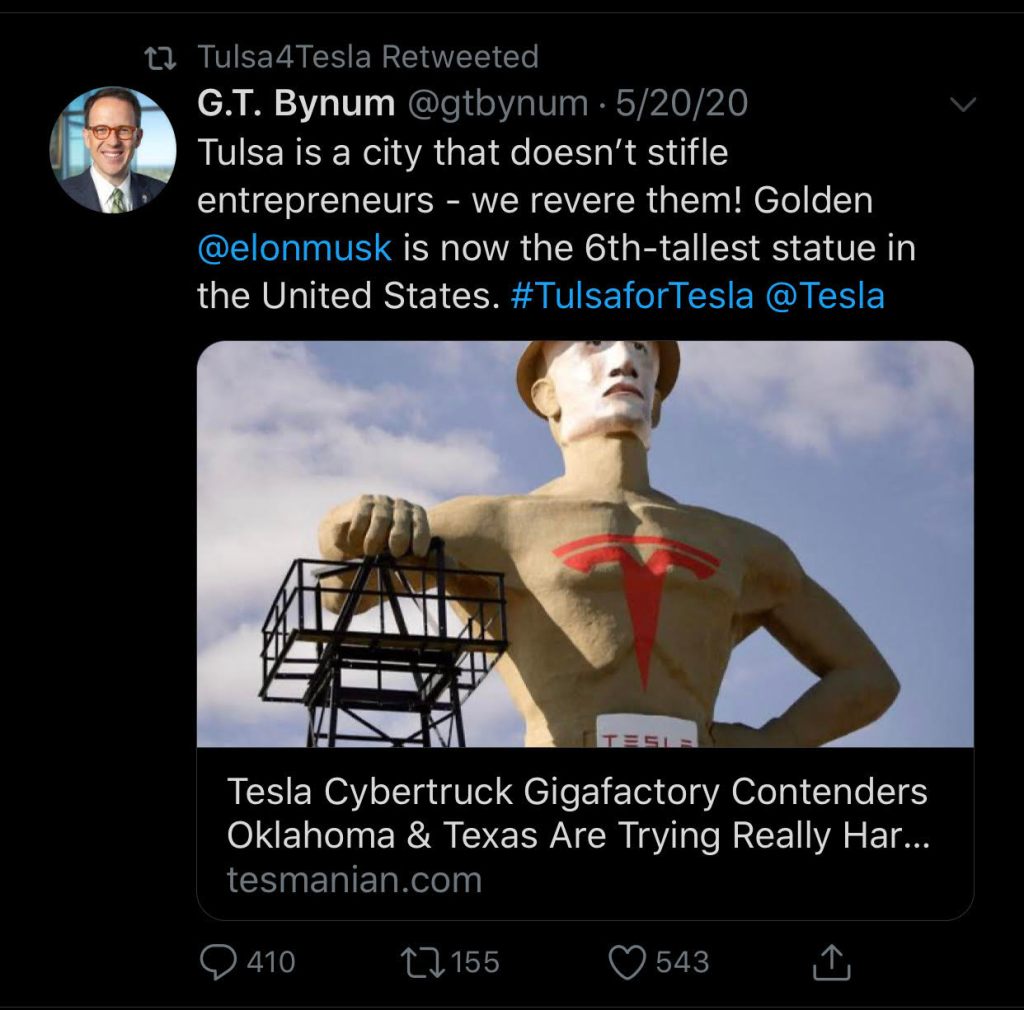
The Tesla Cybertruck Gigafactory would bring in up to 10,000 jobs to a city that deserves to be appreciated. Tulsa offers the romantic pull of Route 66, a diverse populus and a storied history of hard working men and women. There are currently several charging stations for electric vehicles in the Tulsa area, with many more planned as the need arises. With the apparent reversal of our local energy dependence on the horizon, some die-hard oil folk might be resistant to the idea of Tesla being such a prominent fixture in Tulsa. But I assure you, more citizens are in complete support of this move than not.

Twitter – @Tulsa4Tesla

Why can’t oil and renewable energy coexist? Sure, the goal is ultimately to end our dependence on fossil fuels, especially if we have any hope of leaving a sustainable planet for future generations. One thing I have learned about my fellow citizens is this: we are reluctant to change but when given the right guidance and tools, we don’t need to be afraid. It could be just the step we need to kickstart climate change in the right direction in one of the most conservative, oil-dependant states in the US.

Oklahomans aren’t stupid, we are proud. We are a large group of people who have had to adapt for generations. Change may take a bit more time, and we are behind the coastal states, but I believe this could make a great impact in leading to change. I also firmly believe that should the country see such a deep red, oil loving state turn its sights to EVs, it could snowball through to the rest of the red states. ♻️

© Copyright 2018 – 2020. ALL Rights Reserved.


No More Oil | A Call to Action

Washington (GGM) Analysis | July 14, 2020 by Erika Browning

We have all heard the warnings. Personally, I can’t remember a time in all my 42 years where the big “what ifs” weren’t on a constant loop. What if we don’t loosen our grip on fossil fuel? What if we don’t find alternative energies? What if we don’t recycle & continue to fill up precious land with our garbage? 

My questions go a bit deeper. As an expat living in Europe, I was utterly shocked at the lengths people go to to try to turn back the doomsday clock on climate change. 

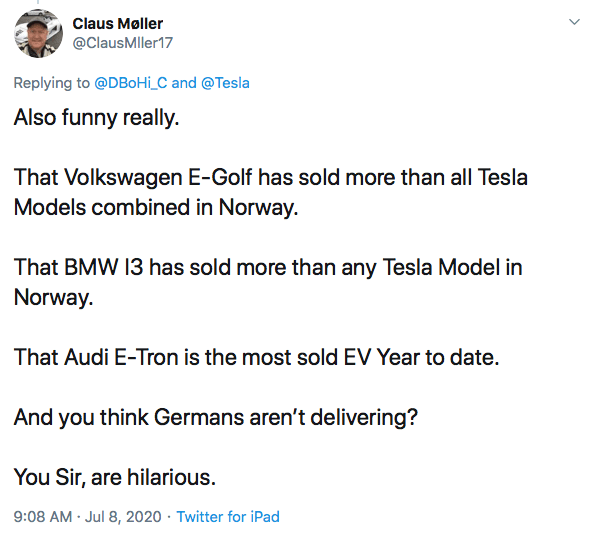
Imagine how baffled I was when I learned that not only are Europeans, (Germans specifically) willing to work towards saving the planet, they are adamant about it. Don’t dare try to stick a plastic bottle in a regular rubbish bin. Car not up-to-par on emissions standards? You’ll be needing a new one that can pass muster. I took trains all over that magnificent countryside. Fields of solar panels lined the tracks in several regions, side by side with fields of hops or vineyards. Modern windmills generate energy, dotting quaint farms that don’t look as if history has touched their walls in centuries. 

Twitter – @SamTalksTesla

Coming from a lifetime in the United States, specifically a city that was quite literally built on a giant oil well, I’ve fully experienced the rabid grip this country has on its oil. As I write, I am looking across the river at massive refineries, smelling the by-products & seeing lights flicker as workers pass by. When an organization does something like offering up alternatives to oil, the whole state gets fired up. This is people’s livelihood! This is people’s land that has provided for them for well over a hundred years. 

These are people whose whole lives have revolved around oil: whether it be production, sales, manufacturing, or, of course, consumption. I suppose the difference between here and Europe could be something as simple as “cultural history”. But I believe more strongly that most of the reasons that Americans are so opposed to change is information related, whether accurate or not. 

Twitter – @ClausMiler17

We all can agree that something must change. Someone, somewhere must find a way to point their fellow countrymen in the right direction. But how? Let’s start with education. For the next several weeks I will be sharing some ideas, both large and small scale, that you can use as a consumer to make a positive change. I will be dutifully researching various methods that worked elsewhere and finding paths to apply those same methods in this incredible country. 

Whether it’s setting up a recycling program in your area, or petitioning for charging stations for electric vehicles, we will come up with some easy ways to make changes to your community, and maybe some ways that will be met with some resistance but also with the tools you’ll need to get these ideas in play.

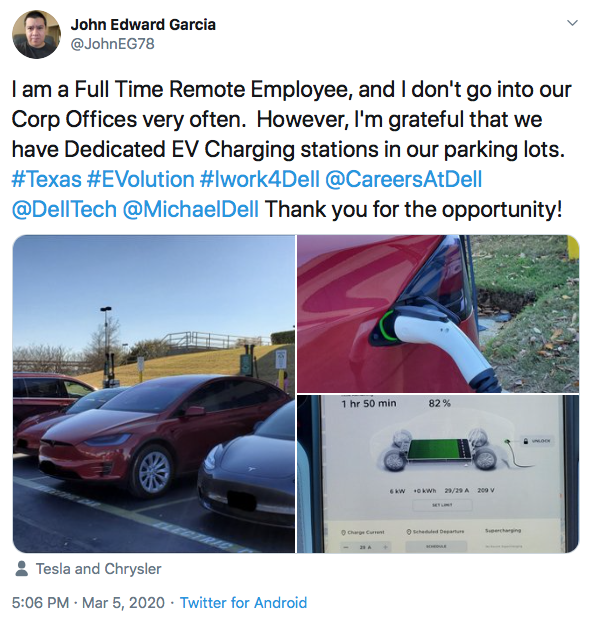
Twitter – @JohnEG78

We have to do better. Our kids and grandkids deserve to live life in a safe environment that won’t be detrimental to their health and well-being. It’s time to start caring about the planet we are leaving behind, in fact, it’s past time.  

© Copyright 2018 – 2020. ALL Rights Reserved.