
A Vegan Thanksgiving Guide

Washington (GGM) Analysis | November 19, 2020 by Sarah J. Kings

Folks across the globe are going green to save mother nature. For many people, that green and clean attitude is going beyond recycling and getting an electric car—many people are changing up their eating habits as well. Animal agriculture practices are a significant source of greenhouse gas emissions, and slaughterhouses worldwide contribute to unnecessary land and water usage. As the Holidays approach, we must think about the estimated 300 million turkeys that are killed each year in the United States. Forty-six million of these birds are killed for Thanksgiving alone. Imagine the global impact we could make if we took turkey off of our plates this year. Here are some must-haves for an eco-friendly–very vegan–Thanksgiving. 

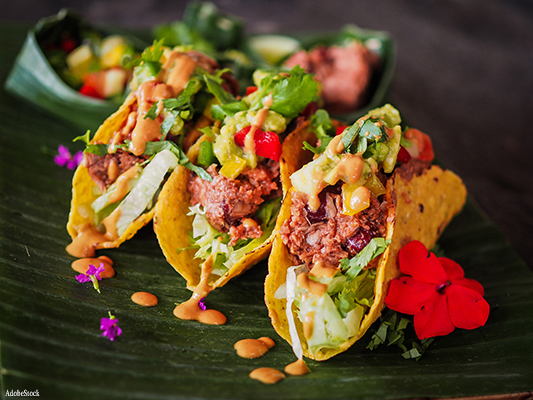
Vegan Whole Turkey – Vegetarian Plus

By now, we have all heard of Tofurkey. This year change it up with a Vegan Whole Turkey by Vegetarian Plus. This is a 4-6lb “whole turkey” that will give your vegan table a Norman Rockwell Worthy centerpiece. The non-GMO soy “turkey” is juicy and delicious. It is cruelty-free and guilt-free, as it has a very low ecological impact.

This image has an empty alt attribute; its file name is CWbL39eH2uXvTgqxM74WQlbYsj5tTHjViBvD2NFFxBl_U41nN1WdACSEvIAs_PixnMbciz5k1B4_S7NKvwwsmScbD8gB_oGXLZWIWLh9YJwD5lnFMxFJu7EfsTkMvYqNCQSAxJUi

Twitter: @VegeUSA

Miyoko’s Organic Cultured Vegan Butter

Luckily many Thanksgiving favorites, like mashed potatoes, green beans, and butternut squash, are already vegetarian. To make these dishes vegan try swapping out dairy and beef stock for things like vegetable broth, almond milk, and vegan butter when cooking. When choosing a butter alternative, try Miyoko’s Organic Vegan Butter, as it is cashew-based, and doesn’t use palm oil. If you ditch animal products and palm oil when serving up your side dishes, you can rest easy knowing that your dinner table didn’t contribute to deforestation or global warming.

This image has an empty alt attribute; its file name is yTXM5xqqynq9PRekR90uA08wxhj-6Dg14JWQ1HcYw091qZGkvHoSq-1aInHpIKXycfR_r0IbHxaBz0MY6bqFrRHtAXd-I2W-ghgZOmNOT0h2y6WYprLVcN3MiD9-RFpXOYhSHX_9

Twitter: @MiyokosCreamery

Pumpkin Pie – Midnight Munchies

If you are vegan, trying to be vegan, or simply thinking about having a vegan treat, you need to know the name Cherise Danae. Cherise is a vegan chef, author, and founder of the site Midnight Munchies. Cherise’s Pumpkin Pie recipe is inspired by her late grandmother’s original recipe, and you can taste the love in each bite. The texture and taste are so on point that this pie will have everyone looking for second—or thirds. 

Tl;dr

  • Animal agriculture is a significant source of greenhouse gas emissions
  • 300 million turkeys are killed each year in the United States
  • 46 million turkeys are killed each year for Thanksgiving 
  • Vegetarian Plus’ Vegan Whole Turkeysoy “turkey” is juicy and delicious
  • Miyoko’s Organic Vegan Butter is cashew-based, and doesn’t use palm oil
  • Midnight Munchies’ Pumpkin Pie is a delicious vegan must-have for Thanksgiving 

© Copyright 2018 – 2020. ALL Rights Reserved.

This image has an empty alt attribute; its file name is esgmark75.jpg
This image has an empty alt attribute; its file name is gallantarcher_3d_socialmedia.jpg

Single-Use Plastic Bags MUST Go

Washington (GGM) Analysis | November 19, 2020 by Attorney Michael Wells, PodcastLegal Fact and Fiction


With the world in the grip of a pandemic, everyone wants something to make life less troublesome. Plastic bags make carrying things much easier. More items can be carried, which means you can avoid going back to your car in the rain or marching through the snow to retrieve that one last item. If only it were so simple. If only we did not have to worry about the environment.

On March 1, 2020, New York state’s ban on plastic bags became law. This means any entity authorized to collect sales taxes cannot distribute plastic bags. Failure to follow this law subjects the entity to up to a fine of up to five-hundred dollars per incident. The State of New York created the ban for good reason. Prior to the ban, New York State produced on average twenty-three billion bags per year, which filled already overflowing landfills, snagged recycling sorters, and wreaked havoc with birds to name just a few problems.

New York is not the only state that passed such a ban. Eight other states (California, Connecticut, Delaware, Hawaii, Maine, Oregon and Vermont) have passed similar laws.

Of course, not all states have such rules, and these states still produce millions of plastic bags. It does raise the question: can lawsuits force other states to ban plastic bags?

Maybe. It is probably a state by state process unless Congress passes a statute under, for example, the Interstate Commerce Clause, that says plastic bags somehow affect interstate commerce. That may sound far fetched, but it is not. The Interstate Commerce Clause allowed Congress to pass much of the civil rights legislation, and it is quite a big stick to bludgeon states into submission. Whether Congress wants to take this up remains doubtful. 

In states that have the plastic bans, the bans are not absolute. New York has some restrictions. Most notably restaurants that offer takeout food, which in the age of COVID-19, can create many plastic bags, are exempt. Although it is likely not “an exception that swallows the rule,” this limitation still creates a problem when so many more people are getting takeout and likely will for the foreseeable future as virus numbers explode. 

But what about other plastic or rubber? 

Rubber glove use during the pandemic harms the environment, and there is no end in sight. While banning plastic bags everywhere will help, it will not solve all issues. It should still be done, however. 

More needs to be done because bags are not the only problem:

While plastic bags certainly make things easier to carry, their burdens to the environment certainly outweigh their benefits. The extent to which lawsuits or Congressional action will limit their use remains unknown. People should count on neither. It really is about personal choices, which must also be made with respect to other items people use. Over time it can all add up to pollution, death, and, as we have seen with COVID-19, a pandemic.

© Copyright 2018 – 2020. ALL Rights Reserved.

This image has an empty alt attribute; its file name is esgmark75.jpg
This image has an empty alt attribute; its file name is gallantarcher_3d_socialmedia.jpg

Biden Won | Will There Be An Electoral College Coup?

Washington (GGM) Analysis | November 11, 2020 by Attorney Michael Wells, PodcastLegal Fact and Fiction

On November 7, 2020, Joe Biden unofficially became the President-Elect, and Kamala Harris unofficially became the Vice President-Elect. Normally the losing candidate, in this case Donald Trump, accepts defeat and contacts the winner to congratulate him or her. Not Donald Trump. He made unsubstantiated claims of “voter fraud,” and then he never backed down. This likely surprised very few as Trump claimed back in 2016 the election was rigged, and he claimed it was rigged again in 2020. What is troubling, however, is most of his party, led by stalwarts such as Senators Mitch McConnell and Lindsey Graham, continue to argue Trump has every right to challenge the election results. And these fears became more real when on November 9th Attorney General William Barr opened up a probe into “voter irregularities” without alleging any evidence. It all smacks of hyper partisanship, and it raises the question as to whether an Electoral College coup is afoot. 

Every four years the Electoral College meets in December. Each state’s electors then vote for the candidate who prevailed in the presidential race in their respective state. This is how it almost always happens. Different states certify their elections on different dates, but the Electoral College meets on December 14, 2020 and votes.

This year Michigan, Pennsylvania, and Nevada proved decisive. Nevada certifies its election on November 16th. Michigan and Pennsylvania certify their elections on November 23rd

All legal challenges must be filed by December 8th, the so-called “Safe Harbor” date. In other words, challenges cannot be lodged after that date. It should be noted all challenges filed by Donald Trump’s campaign have been dismissed thus far. One filing was improperly filed and therefore rejected.

This is a short summary of the legal process involved. In all likelihood, everything will run smoothly, and Joe Biden will be declared, officially at least, the President-Elect. 

This does not answer the question as to whether Trump’s supporters, both elected and otherwise, will accept the results of the election. Quite frankly, it does not matter if they accept the results. 

Recent rhetoric from supporters has sounded alarm bells such as Senator’s McConnell’s statement that Trump was “100% within his rights to challenge the results of the election.”

On November 10th, Secretary of State Mike Pompeo said:

Conservative commentator Bill Kristol responded, “Be alarmed,” in response to this troubling statement. And he is right. 

Perhaps the best quote as to the vagueness and lack of substance of “voter fraud” came from Senator Lindsey Graham, who said: “And we will continue, in spite of my democratic colleagues protestations, we’re going to find someone accountable for something, when it comes to crossfire hurricane.”

Legally, the important dates to keep in mind are:

  • December 8th “Safe Harbor” deadline (no lawsuits after this date).
  • December 14th Electoral College meets and votes (it is over after this date). 

Are there conspiracy theories out there? Yes. Could there be violence? Yes. Sadly, violence is always possible in America, but legally speaking not much will happen. The Electoral College will meet December 14th, and Joe Biden will officially become President-Elect. Again, this all assumes we do not fall into lawlessness and utter chaos. If we do, the law will not matter. 

© Copyright 2018 – 2020. ALL Rights Reserved.

This image has an empty alt attribute; its file name is esgmark75.jpg
This image has an empty alt attribute; its file name is gallantarcher_3d_socialmedia.jpg

Portugal Ascending in the Age of Sustainability | Cork Element

Washington (ONGC) Analysis | November 9, 2020 by Noreen Wise

Portugal is ascending. Sustainability is the the critical path forward in our effort to curb global warming and become carbon neutral. For ambitious overachievers, sustainability will ride us all the way to carbon negative. Successful sustainability is about adjusting every single one of our everyday small choices and shifting to sustainable options. What food do we eat? How is it packaged? Do we drive an EV, or walk, ride a bike? Are we using a bamboo toothbrush, refusing plastic straws? Do we have a vegan leather cork bag?

Continue reading “Portugal Ascending in the Age of Sustainability | Cork Element”

It’s Time to Meet Meati | Vegan Scene

Washington (GGM) Analysis | November 5, 2020 by Sarah J. Kings

Meati Foods is a Colorado based vegan startup, and their food is amazing! This plant based meal option is cruelty free and unbelievably sustainable. Each serving of their Meati Chick’n is packed with healthy fiber and 16 grams of complete protein. There is nothing “fake” about this alternative meat either. Believe it their food is made from fungi. The company’s slogan is “funging delicious!” With absolutely zero fat and cholesterol, and plenty of vitamins and minerals, Meati Foods is a no brainer.

Continue reading “It’s Time to Meet Meati | Vegan Scene”

Fracking May Decide Pennsylvania

Washington (GGM) Analysis | November 4, 2020 by Michael Wells, Attorney @slnc01

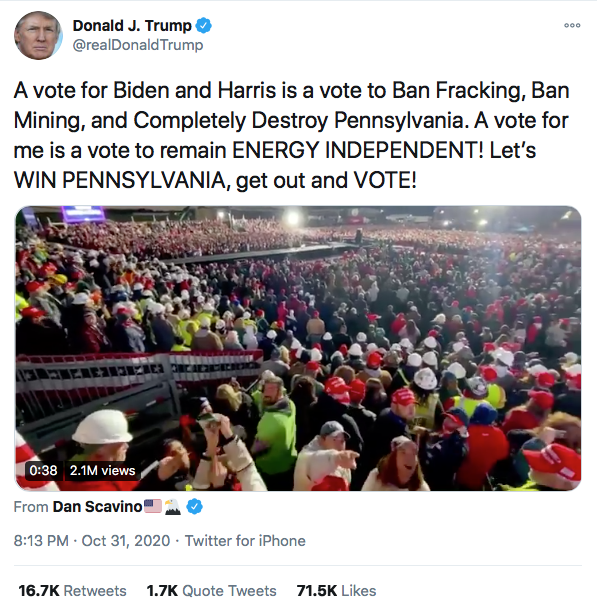
Former Vice President Joe Biden and President Donald Trump are locked in a tight battle for the presidency, which may come down to Pennsylvania. Big coal and facking employ many people in Pennsylvania, and, understandably, fracking is a huge issue. All the votes have been cast and are being counted, but the Pennsylvania race (and possibly the presidency) may come down to the issue of fracking. The two candidates’ positions are more similar than you may think.

Hydraulic fracturing (fracking) is a technique for extracting oil and natural gas by firing pressurized liquid into the Earth’s crust. Trump has long supported the practice and has even signed an Executive Order to protect fracking. Biden’s position has been to say he will not ban fracking, but that he will look towards alternative fuel sources, perhaps in an effort to win key states such as Pennsylvania, Michigan, and Ohio (which he appears to have lost). One indication of how important this issue is in Pennsylvania can be gleaned from Vice Presidential Kamala Harris’s October 6, 2020 tweet:

While Biden and Harris must appeal to the Green New Deal part of the Democratic Party, they must also win key states such as Pennsylvania, which rely heavily on fracking. To what extent this is just politics, remains to be seen, but, given what appears to be a Repulican Senate, legislation to ban or limit fracking does not appear possible. This means this dangerous practice will continue. 

According to an article from Euronews, fracking poses a number of environmental hazards:

  • Methane leaks occur frequently to the tune of one million tons in Pennsylvania per year. The industry only reported 64,000 tons.
  • Methane and other gasses released through fracking are a problem because they trap twenty-five more times heat in the atmosphere than carbon dioxide.
  • Fracking pollutes the groundwater supply, which can cause cancer.

From a legal standpoint, the pollution issues pose millions in liability for companies that are not careful. Quite frankly, even if these companies are careful, the risk is quite high. Although not the result of fracking, Flynt, Michigan is a cautionary tale as to what happens when drinking water is contaminated. 

Fracking does supply jobs, upwards of ten million nationally, but, if Biden wins, his energy plan will likely aim to rejoin the Paris Agreement. It is unclear whether fracking as it stands in the United States would violate or otherwise cause problems with the agreement.

Biden has said he opposes fracking on public lands, but it is unclear what exactly this means. Even if Biden were to oppose fracking altogether, it is unlikely he could get a bill limiting or banning it  to pass the Senate due to the Republican majority. 

Fracking’s future remains uncertain in the United States, but it does appear it is not going anywhere anytime soon even after the votes are counted and a victor declared. 

© Copyright 2018 – 2020. ALL Rights Reserved.

This image has an empty alt attribute; its file name is esgmark75.jpg
This image has an empty alt attribute; its file name is gallantarcher_3d_socialmedia.jpg

How Much Carbon Do Bushes Absorb? This Ninth Grader Plans To Find Out

Washington (GGM) Analysis | October 30, 2020 by Noreen Wise

Do bushes sequester carbon too? Is planting more shrubs as important as planting more trees in helping to lower atmospheric carbon levels and reverse global warming?

One student at W. T. Woodson High School in Fairfax, Virginia is determined to find out. Ninth grader Julia Victor has accepted the challenge to conduct her own science experiment for the upcoming Regeneron International Science and Engineering Fair and is busy mapping out the procedure she will follow to test how much carbon five species of Northern Virginia natives can absorb in comparison to one another. 

The Regeneron ISEF has a wide range of categories, 21 in all, that 1800 participating students are selecting from. As a nature lover, Earth and Environmental Sciences was Julia’s top choice, which she quickly narrowed down to climate change. Julia asked herself questions about which NoVa natives might absorb the most carbon. She then spent time researching, and eventually arrived at her hypothesis: “I am hypothesizing that the holly tree will grow to be the largest and will absorb the most carbon. I also think that shrubs might not be far behind. I am hoping to be able to come to the conclusion that shrubs and smaller plants are just as important to reversing climate change as large trees.”

Julia will be implementing the following steps to test her hypothesis. All the plants will be kept in open containers.

  1. Remove the soil and weigh each plant. Record each plant’s bare root weight (without soil).
  2. If plants are not the same weight, trim each plant until they are approximately equal.
  3. Plant each plant in its new container with 1 gallon of soil each. Label each container with the plant species.
  4. Water each plant with 1 cup of water each. 
  5. Set up each plant’s light to a 12-hour timer to simulate the sun.
  6. Water each plant regularly with its recommended amount of water.
  7. After 25 days, remove all the soil from the bare roots from each plant and weigh.

An important science experiment like this one is challenging enough without there being an extra layer of difficulty. But, Julia isn’t daunted by the complications during the fall season. Julia explained, that there are far less species available for her to choose from this late in the year. Many NoVa natives are nearly dormant, so there’s far less photosynthesis, which means very little, if any, carbon absorption. But Julia persevered and unearthed several standouts she can rely on:

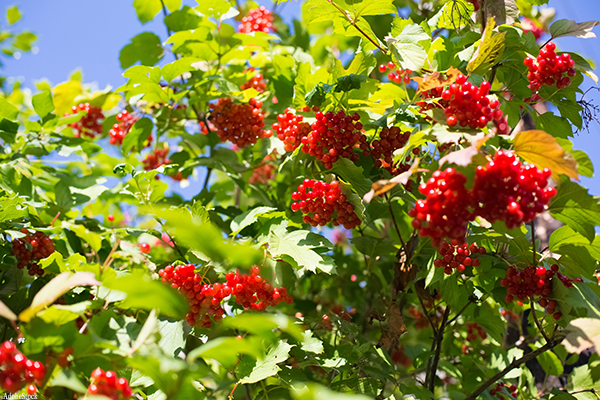
  • American Holly 
  • Strawberry bush
  • Spicebush
  • Arrowwood Viburnum
  • Black Chokeberry

We’ll be checking back with Julia in December to learn about the conclusions she drew once she completes her experiment, weighs each plant, and is able to identify the winning species that sequestered the most carbon. Julia will be managing a total of 25 small plants for her project.

This is a lot of extra work during a very challenging global pandemic. Julia began her freshman year with virtual learning, and appears to be very excited about having something she feels passionately about, nature and science, to keep her mind preoccupied in the midst of a health crisis. “This is my first time participating in the Regeneron ISEF and I’m excited to see everyone’s projects, especially during covid-19.”

I asked Julia how she keeps from feeling intimidated by such a challenging, high level competition. Her response was one that we could all apply to our own lives.

“These days, it’s very easy to get intimidated by projects and big assignments. I found that if I don’t think about it as an assignment, but rather as something I enjoy, then it becomes much easier to do get motivated by my curiosity.”

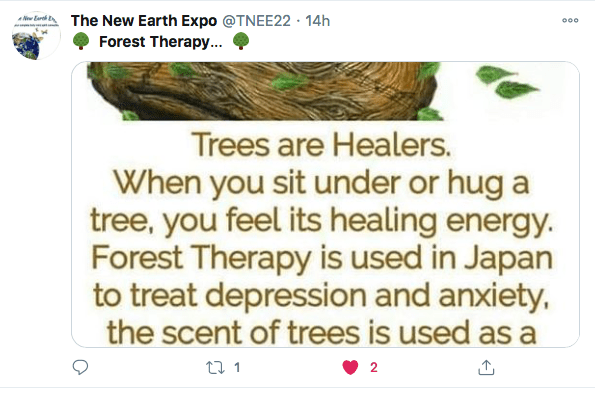
Nature is an exciting and therapeutic ally to help combat our daily challenges during covid. A major destresser, thanks to its beauty and healing scents, as well as the chemicals it emits that we humans respond to by releasing our own positive chemicals—serotonin for example. Nature is very responsive to human interaction, both positively and negatively. Humans and nature are connected through a symbiotic relationship. What we give is what we get. We see this with climate change of course, but it’s equally as powerful on the positive side of the coin. Nature nurtures. It comforts. Heals. Inspires. Supports. Motivates. Hanging out with nature makes us physically and emotionally stronger. It’s time to recognize this fact and act on it. Planting millions of trees and shrubs and flowers and all types of nature is an investment that pays us back exponentially. So, let’s get planting! If it’s too cold where you are right now, you can plant a seedling indoors in a container and leave inside until spring. 

© Copyright 2018 – 2020. ALL Rights Reserved.

This image has an empty alt attribute; its file name is esgmark75.jpg
This image has an empty alt attribute; its file name is gallantarcher_3d_socialmedia.jpg

Our Microplastic Crisis and a Young First Responder

Washington (GGM) Analysis | October 23, 2020 by Noreen Wise

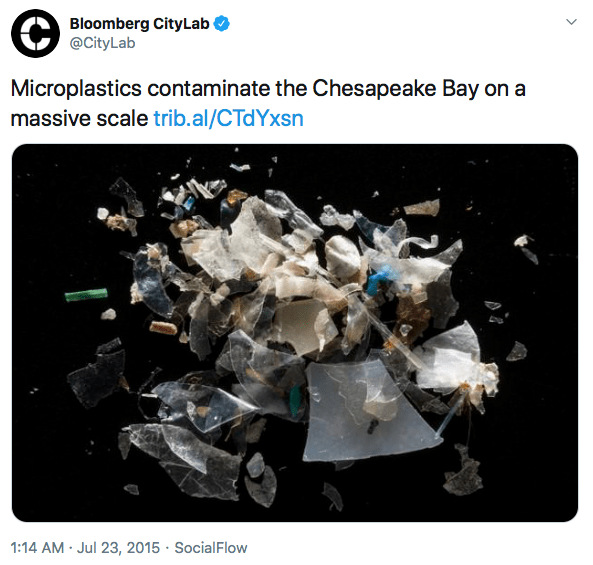
Microplastics have become an urgent health and environmental crisis. These tiny toxic particles are literally everywhere. In our water. In our food. And in our bodies. The five (5) millimeter flecks, smaller than an ant, are made up of broken down larger plastic objects such as water and soda bottles, single-use plastic bags, multiple everyday products that we don’t think twice about, cosmetics and toothpaste for example, even our synthetic clothes that shed tiny bits of plastic while churning around in our washing machine.

Back in September 2019, science blogger Kevin Dervishi spelled out in Harvard University’s Science in the News very clearly to readers, that each of us is a first responder in this alarming crisis. Every single one of us needs to rush to act. For many, the message fell on deaf ears, which has resulted in a continued path forward toward a looming catastrophe. 

As gloomy as this may seem, a bright glimmer of hope shines through the dark clouds along the Chesapeake Bay in Northern Virginia. A youth conservation activist has been inspired and is responding to the urgent call to action. Carolyn Rohr, of Fairfax, VA, has stepped into the arena. 

During Carolyn’s junior year of high school, she followed the advice of her AP environmental science teacher, and filled out an application for the Youth Conservation Leadership Institute in Fairfax County, VA. While involved in YCLI over the summer, Carolyn seized the opportunity to research the impact microplastics have on the environmental health of the Chesapeake Bay after she discovered that microplastics are Chesapeake Bay’s biggest pollutant. This jarring fact was significant. Chesapeake Bay is a watershed connected to six Mid-Atlantic states, as well as the entire population of Washington DC, and serves more than 18 million people. The majority of microplastic particles slip through filters and into our water supply.

Carolyn presented her findings to a group of more than 50 accomplished adults over a Saturday morning Green Breakfast webinar. She created a lesson plan for 7th graders that aligned with Fairfax County’s educational requirements and included multiple activities. Her polished presentation was very powerful, inspiring immediate action. Her lesson plan would certainly be a positive influence for the 7th grade population in Northern Virginia, as well as communities across the country, inspiring increased involvement in acting on eliminating as much plastic from their daily lives as possible by forming plastic-free habits and choices.

Carolyn explained that there are three main ways that microplastics enter the Chesapeake Bay:

  • Plastics in landfills
  • Littering
  • Products that go down the drain

She outlined that toothpaste is a great example of how easy it is to unwittingly pollute our own water supply. She noted that cosmetics are another everyday example. Multiple brands of both products, contain microbeads, the abrasive exfoliant that is the essential ingredient for these particular product lines.

Carloyn cautioned webinar viewers that these microplastic particles release toxic chemicals, as well as trick organisms living in the water into believing they’re full when they’re not, so they often starve to death, and that microplastics also become part of the food web process.

Most importantly, Carolyn supplied valuable insights about what each and every one of us can do to reduce the toxic plastic we’re consuming.

  • Reduce single-use plastics
  • Recycle properly
  • Refuse products that contain microbeads, which shouldn’t be too difficult since they’re now banned in all 50 states
  • Volunteer to help cleanup rivers and streams
  • Most importantly SPREAD THE WORD

When I asked Carolyn what examples she could provide for how to spread the word, she suggested: “Social media is a great way to spread the word and spark change, it’s one of the main reasons that microbeads are being outlawed in the US. Setting an example is another great way to not only spread the word, but also to encourage action. People learn from each other; the more people you see doing something the more likely you are to follow along, that’s probably why the save the turtles anti-straw trend was so huge a year or two ago. But it has since faded.” 

This sounds wonderful. I’m all in on this!

Carolyn Rohr is a military brat, who was born in Jacksonville, NC and has lived in a diverse collection of cities across the globe, including Okinawa, Japan when she was a young and impressionable five year old. While in Okinawa, Carolyn and her family had a home close to the ocean, where she spent “a lot of time playing in the tide pools and looking at the interesting creatures.” Her family eventually settled in Northern Virginia where’s she’s lived for the past ten years. Carolyn spends most of her time outdoors, and often feels torn between her love of the ocean and her passion for the mountains. “I feel like I could spend my entire life in the mountains and I would be quite happy.” 

As a high school senior, Carolyn is busy planning for her future. She is aiming for a dual major in Film and Marine Science and hopes to attend either University of Miami in Florida or University of Delaware, “Both schools have amazing Marine Science programs that I would love to be part of.”

Carolyn has a powerful message for all of us. “‘Only you can be the change you wish to see in the world.’ – Ghandi. The only way to see the microplastic problem disappear completely is to go out into your community and play an active role in fighting against it.”

Science blogger Kevin Dervishi’s ears must be burning. Young first responders are taking bold steps to help move us all in the right direction. The 18 million along the Chesapeake Bay are greatly benefited by Carolyn’s dedication and hard work to improve the health of our watershed. Let’s do our part by following her excellent advice.

© Copyright 2018 – 2020. ALL Rights Reserved.

This image has an empty alt attribute; its file name is esgmark75.jpg
This image has an empty alt attribute; its file name is gallantarcher_3d_socialmedia.jpg

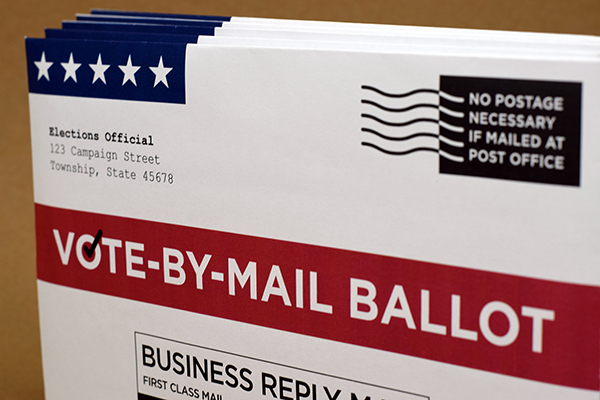
Intense Workload at Election Offices | Human Error?

Washington (GGM) Analysis | October 21, 2020 by Noreen Wise

According to one recent report, there are roughly 6.5 million registered voters living outside the United States, which means there are many stakeholders who believe in our most basic democratic principle, the right to vote. And it seems that the majority of these living abroad — many whom happen to be employed by the US military and the US State Department — will indeed be following through and voting by mail.

Americans living abroad, have always relied upon the US Postal service to efficiently deliver their ballots. Their reliance on the dedication of US Postal Service employees, who heroically persevere through all types of intense weather situations and perilous global events, have always brought tremendous peace of mind. But this year, the most important presidential election ever, our confidence in the postal service is shaken to the core, as a result of the newly installed Postmaster General, Louis Dejoy.

Over the summer, Dejoy launchd what appears to have been an intentional post office dismantling campaign in an effort to undermine voters who planned on voting by mail, which had the potential of severely impacting the many millions across the continental United States who planned to vote-by-mail during the covid pandemic, but also the potential election-changing 6.5 million who vote from abroad.

With this as the backdrop in the lead-up to November 3, 2020, it’s completely understandable why so many towns and counties across the country decided to offer early voting in their communities, as well as the mail-in-ballot option for all who submitted a vote-by-mail application, and had it approved.

Because this is a first time crisis — voting during a global pandemic which is being managed by a president who spends every waking moment trying to convince the public it’s no big deal — no town or county, especially those with a majority of registered Democrats, could have predicted, and thus planned for, the volume of citizens who would respond to the opportunity of both main-in-ballots and voting early.

The fact that so many election offices were overwhelmed on such a grand scale should inspire an instant response. However, in order to solve this problem, communities have to first acknowledge the problem exists. Election offices across the country ned more help. If I experienced a one-off malfunction, I can’t help but believe there are many others with similar stories. We have to be our own best advocate.

I’m covering climate action up in Canada during the pandemic, and learned the hard way that human error can potentially impact election results, unless we are willing to step up and act quickly. Thankfully, there are angels off in the wings, with sharp critical thinking skills, who know how to act swiftly and find a way through, when everything falls apart.

•I submitted my vote-by-mail application online a few days after Labor Day, following the recommended guidelines of 45 days before election.

•I had the option of selecting between having the ballot emailed to me, or mailed. I obviously selected “email.” What could go wrong with that?

•I expected to receive it the next day, but nothing arrived. The following day, when again there was no email in my inbox, I phoned my local election office. “You must be patient. We’ve received so MANY mail-in-ballot applications.”

•I patiently waited a week, nothing. So I called again. “Please be patient, we’re overwhelmed. Please don’t worry, you’ll definitely receive it.”

•I then waited an entire month. Still nothing. I began to panic, and last week called again. After waiting on hold for an hour, I was informed that my application for mail-in-ballot was denied. “DENIED? Why?” … “We don’t send ballots to PO boxes.” … “But you were supposed to email, not send.” … “Oh, right. I see that now. The employee who was checking the application must have missed that. She made a mistake.” … “What? Can you email it right now?” … “Early voting just started and we’re mobbed. We’ve been working 16 hours per day.” … “But I want to vote too, please email my ballot.”

•To make a log story short, I called back a few hours later. An angel election office employee gave me her personal work number and email, told me to call back if I didn’t receive the ballot by the end of the day. She worked the phones, but would make sure the woman who was emailing ballots, emailed mine. She then followed up through email, as well as called back later that night, after I left a message. She wouldn’t let this go until I confirmed that I’d received my emailed ballot.”

American heroes like this election worker, are ultimately the glue and the backbone of our democracy. Her determined, resourceful ingenuity, enabled one more vote to be cast during this election to save our democracy. M. L. renewed my hope that we’ll succeed with this vital mission. Thank you so much! ✅

© Copyright 2018 – 2020. ALL Rights Reserved.

This image has an empty alt attribute; its file name is esgmark75.jpg
This image has an empty alt attribute; its file name is gallantarcher_3d_socialmedia.jpg

Amy Coney Barrett Unsure of Climate Change, a Scientific Fact

Washington (GGM) Analysis | October 16, 2020 by Michael Wells, Attorney @slnc01

On October 14, 2020, Trump Supreme Court nominee, Amy Coney Barrett, told Senator Kamala Harris (D-CA) she could not say whether climate change exists because it is a “politically contentious issue.” She also confessed to Senator John Kennedy (R-LA) she has no firm view on climate change. A skeptic might ask what her view on climate change has to do with cases that might come before her when she sits on the Supreme Court. Quite a bit, actually, especially in light of the lawsuits filed by a number of States’ Attorneys General against Exxon in the past few years.

The New York State Supreme Court in 2019 considered whether Exxon lied to investors about the company’s contribution to climate change and thus violated securities law. The Court ruled in Exxon’s favor, according to NPR, stating there was no evidence Exxon hid evidence of climate change.

This should signal alarm bells across the globe. Climate change exists, and of course the oil companies knew and know about it. It is the greatest danger any of us will face in our lifetimes.

Moreover, when juxtaposed with Barrett’s testimony, that she could not comment on climate change even to acknowledge it exists, it does not bode well for the environment. Given the lawsuits against Exxon and other energy giants, it stands to reason that climate change is a major legal issue.

Barrett claimed she is not a scientist, but one does not need to be a scientist to accept climate change as a fact. And, if it is accepted as a fact, then that certainly affects how she would consider a case.

It is entirely possible (likely even) that, if Biden prevails, the Justice Department will pursue these climate change cases, thereby forcing Barrett to rule on this issue.

Hypothetically speaking, assume the previous New York case made it to the Supreme Court, and at the heart of the case was whether an oil company was committing fraud by hiding climate change from investors. If Barrett were to believe climate change does not exist or was unsure it existed, then her view of fraud would be very different. Then she might rule in favor of the oil giant thus allowing them to continue to pollute, destroy the environment, and unleash a further parade of horribles, possibly another COVID-19 type pandemic. 

Again, this is just speculation, but is it not all speculation as to what kinds of cases Barrett will hear? It is a question or probability. She will hear cases about abortion, birth control, searches and seizures, voting rights, climate change, and myriad other issues none of us ever hear about. In all likelihood, she will hear a case on climate change and likely very soon. 

In fact, Minnesota Attorney General Keith Ellison filed a lawsuit on behalf of the citizens of Minnesota against Exxon, Koch Industries, and the American Petroleum Institute, in the Spring of 2020, alleging the fossil fuel industry knew the damage these fossil fuels would cause the environment.

The cases are coming. It is only a matter of time before a case goes before the Supreme Court. 

Climate change affects everyone on the planet, and it is a problem that everyone will need to work together to solve. We can do our part such as reducing our carbon footprint and also by planting trees. But we also need to be able to count on a nominee to the Supreme Court to accept this established science because, if she does not, what hope do any of us ever have that climate change will ever get under control?

© Copyright 2018 – 2020. ALL Rights Reserved.
This image has an empty alt attribute; its file name is esgmark75.jpg
This image has an empty alt attribute; its file name is gallantarcher_3d_socialmedia.jpg