Category: Climate Action

The Golden Rule & Covid-19 | Recycling and Waste Management

Washington (GGM) Analysis | April 27, 2020

NWHillReport-Pic by Noreen Wise

“Do unto others as you want them to do to you.” ~ The Golden Rule

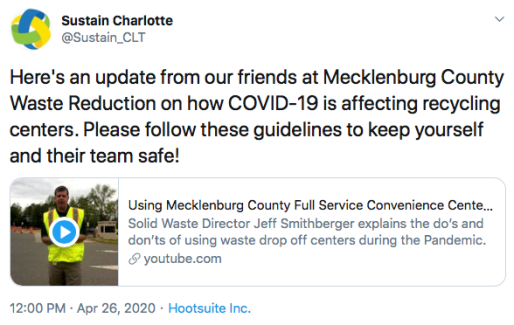
It’s exciting to see that recycling has been deemed an essential service during covid-19, but keeping these dedicated waste management employees safe during the global pandemic is equally as important.

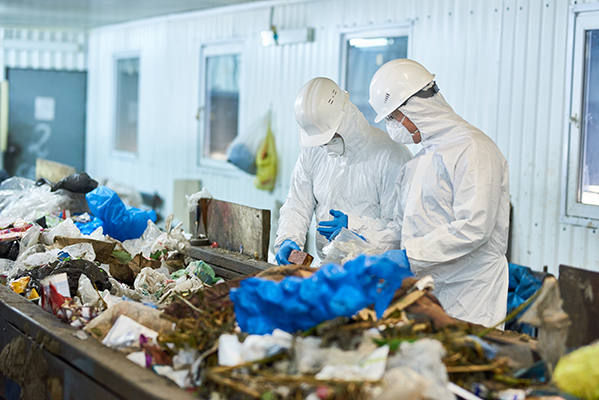
With everyone stuck at home, there’s now more home garbage than ever before. Further, the vast majority of us are ordering the bulk of our purchases online, and having it delivered, so there’s likely a mountain of recyclable cardboard boxes associated with each household. And how about glass bottles from our favorite alcoholic beverages? Many manufacturers rely on these particular recyclables to produces their products. Cardboard and glass are two of the more essential components of the supply chain for recyclable manufacturing.

So, how is recycling being handled during covid-19? There seems to be conflicting accounts depending on the state and local municipality.

BrightSide-SquareNEWER-400
Daily conversation focused on how we can turn a negative into a positive and land on the bright side. A daily emotional vitamin that will boost your spirit. PodcastHost, Noreen Wise.

Here’s what we know according to The Recycling Partnership:

  • even though deemed essential, many communities are suspending curbside recycling pickup so please check with your town’s waste management website
  • if your locality has drop off recycling, please try and take advantage of this, while maintaining the safe protocols of a facial covering and gloves, manufacturers are desperate for these materials
  • cities will have much tighter budgets in the new fiscal year beginning July 1, 2020, many towns are discussing cutting back on curbside recycling pickup, so we have to make plans each week to drop off recyclables at drop off centers
  • states and municipalities are still trying to work out the best way to handle plastic PPE and recycling, hard plastic can be recycled, but it can be dangerous, (more information below)
  • Wipe garbage bin handles down before rolling to curb, and wear gloves when pushing the bin to curb
Screen Shot 2020-04-27 at 5.24.46 PM.png

Additionally, there are specific rules regarding how to handle waste and recycling if anyone in the household has tested positive for covid-19.

  • No garbage brought to the curb during the 14 day quarantine period
  • add an additional 72 hours to the 14 days for recycling

Screen Shot 2020-04-27 at 5.25.10 PM.png

Our individual actions are life and death for many in our communities. It’s very important that we follow the guidelines to keep everyone safe. The golden rule has never meant more than it does right now. Do unto others as you want them to do unto you. ♻️

© Copyright 2018 – 2020. ALL Rights Reserved.
GallantLogoNWST-75

Finding Our New Groove | Weaving in Green While We’re at It

Washington (GGM) Analysis | April 5, 2020
NWHillReport-Pic by Noreen Wise

Every day is another step in this new, weird world we’re adapting to. And because we were blindsided, and thus had no preparation, we’re missing nearly every safety necessity, which forces us to be incredibly resourceful, and improvise, if we want to overcome these circumstances and stay alive. Sadly, despite all our efforts, many will still perish.

Improvise. Adapt. Overcome. …is a military motto. Makes sense. I can totally picture improvise-adapt-overcome being the daily practice when the military is out in the field. And the military’s story of reality on the front lines, is now our reality as we stand on the front lines. With so much adapting and improvising taking place 24/7, it’s an excellent opportunity for us to absorb the big picture and make all the changes we’ve been promising ourselves for days, months, and even… years.

Climate reality.

Screen Shot 2020-04-05 at 12.44.14 AM.png

I remember the incredible opportunity I had after the townhouse I lived in was flattened by a tornado. The first few weeks were traumatic, of course. The structure was deemed a total loss. My then-husband and I had to live in temporary quarters, while it was rebuilt. I was so grateful to have lived through the frightening experience (I survived by running into a closet when I heard the train coming, and when I opened the door after the huge KABOOOOM, everything was gone). I thus wasn’t going to complain about any of the inconveniences or hardships that followed.

I think what kept me so positive, was that I could suddenly make all the changes I’d been dreaming of. Be careful for what you wish  for. Be careful for what you wish for. Be careful for what you wish for. Seriously, I must have said that a million times. When life is suddenly helter skelter, I could finally fully grasp what Newtown’s first law of motion was all about: an object at rest stays at rest, or an object in motion stays in motion at the same velocity, unless acted upon by an external force.

Screen Shot 2020-04-05 at 12.43.32 AM.png

Carpe diem. Seize the day. I became the whirlwind of change, quickly implementing the home designs I’d been planning for years. I upgraded the floors in several rooms with upscale tile, and top of the line carpeting in others. A few months after moving back in, the upgrades enabled us to sell the townhouse in record time during a down market at asking price and relocate across the country to California. I also began a writing course at some point during all this craziness, which set me on a new path to become the writer I had dreamed of becoming ever since I was a child. Those eight months were an endless blur of activity, the equivalent of the shifting of a kaleidoscope where every single spec shifts.

Screen Shot 2020-04-05 at 12.45.53 AM.png

I feel the exact same right now. There’s safety with all of us suffering the same grim fate together. It reminds me of my father’s chain saw accident when he slipped and fell and accidentally sawed his leg down to the bone (it was amputated at the hospital). The doctor explained that what saved my father’s life was slicing all the way through the largest vein in his leg, causing it to clamp shut on its own. Apparently, if he had nicked it, he would have bled out.

So, too with us. We’re all in this together. Let’s make the most of this incredible opportunity and commit to implement the many changes we’ve been promising to make for climate… as well as removing corrupt, lawless politicians who’ve degraded our American principles and undermined our Constitution, which we all now hold so dear.🌱


Screen Shot 2020-04-05 at 12.46.54 AM.png

© Copyright 2018 – 2020. ALL Rights Reserved.

GallantLogoNWST-75

Time to Plant Climate Gardens While We’re Stuck at Home

Washington (GGM) Analysis | March 14, 2020
NWHillReport-Pic by Noreen Wise

Backyard gardens are one of the easiest most inspiring ways to lower our carbon footprint. Adding multiple layers beneath trees and along fences, lining the front of homes. Shrubs, flowers, vines, ground cover. Ivy and creepers up and down walls, around mailboxes and lamplights. International cities like London and Paris have perfected this.

The best part about zeroing in on a giant burst of nature as the solution, is that it works immediately, especially if we all collectively execute ASAP, during these next few weeks while we’re stuck at home hoping tp stay clear of the coronavirus pandemic.

Imagine the positive impact.

HillReport3-13-2020.jpg

In the nick of time, no less. We’re down to only nine years to save humanity from climatocalypse. So, the silver lining of being thrown into our current heart-wrenching calamity, with unexpected at-home time on our hands, is that we can pause and focus on the long term, and alter our destiny by conquering what otherwise would most likely be an improbable collective gardening effort.

Live in an apartment or condo? Balcony, patio and rooftop gardens or plantings on every available flat surface is a life-and-planet-saving difference. With a success rate as significant as this will be, at a minimal cost, we can all jump in first thing in the morning.

HillReport3-14-2020d.jpg

Screen Shot 2020-03-14 at 12.05.28 AM.png

Bringing back nature, will not only be a giant leap forward in our progress at lowering our atmospheric carbon level back down to 350 PPM, but has multiple other valuable benefits.

Nature improves mental health, not only an emotional positive boost, but a sensory one as well. Sunlight provides the much needed daily dose of vitamin D that will keep our outlook positive and optimistic. Additionally, nature’s scent has an array of therapeutic properties. Some species are calming and supportive, while others keep us alert and energized. There’s also the tangible, yet little understood, sentient characteristics of nature that indicate plants and trees can problem solve, even connect with other plants and animals, as well as communicate with each other, and some believe communicate with humans, in addition to nurturing humans,  .

Screen Shot 2020-03-14 at 12.06.50 AM.png

Considering how many alarming societal threats we face — climate, suicides, drug addiction, physical and mental health — the fact that nature can aid in improving every single one of these, is a very compelling reason to quickly sow our climate gardens during this unexpected period of being stuck at home (at least it’s spring, the planting season). In fact, there’s no better way to keep our minds off this extended emergency, than to dig into a powerful solution that will not only bring back nature, but will keep us calm in a crisis.

Once nature is back, the wildlife that goes along with it will also return. Our planet will be healthy again, which will make humankind that much healthier too. It all begins right now, during these mandated weeks of social distancing.

Let’s GO!

© Copyright 2018 – 2020. ALL Rights Reserved.
GallantLogoNWST-75

Powerful Impact of Meadows on Carbon Sink

Washington (GGM) Analysis | February 24, 2020 by Noreen Wise

Thousands of innovators across the globe are aggressively working to manufacture machines that will pull carbon out of the air and store it, or transform it into something useful. Recent news about Amazon committing $10B to combat climate change has created hope that some of these funds will be used to create innovative solutions such as carbon sequestration machines.

But we’re not there yet, so we have to maximize what’s currently at our disposal — nature.

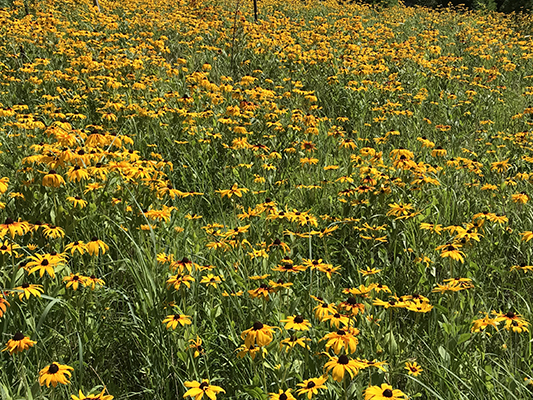
Planting trees is our number one priority.  But, equally as important are meadows. Expansive landscapes of open fields that contain a variety of plants enable the funneling of carbon into their roots and trapping it in the soil where it will be safely stashed even when the roots die.

According to the Scientific American on sustainability, “Carbon Off-Set Cowboys Let Their Grass Grow”:

“The best way to maximize the amount of carbon that gets trapped underground is to maximize grass growth.”

Screen Shot 2020-02-24 at 2.24.22 PM.png

The fact that so many different types of botanic species grow in a meadow, and their roots all intertwine underground, appears to be why meadows store more carbon than tall and bushy shrubs, although they take up a lot more land. Once carbon is trapped underground, fungi feed off it, and according to the Scientific American, fungi are often consumed by microbes and worms which stabilizes the carbon.

Screen Shot 2020-02-24 at 2.28.47 PM.png

The western half of the country, with it’s massive open terrain, has a huge opportunity to maximize this option and help the United States take giant steps forward in cutting carbon. Apparently, a cap & trade program that reward ranchers and land owners is already underway. According to Civil Eats, Indigo Ag, a Boston-based agtech company, has raised $600 million from investors to help farmers sink one trillion tons of carbon on their property. Farmers are paid $15 per metric ton of stored carbon.

It’s exciting to see that the economy that led to our stratospheric carbon emissions rate, can be used to turn the catastrophe around and inspire land owners to reach for an opportunity to reduce carbon just as quickly and significantly.🌱

© Copyright 2018 – 2021. ALL Rights Reserved.


Why is the Sunshine State so Far Behind with Solar?

Washington (GGM) Analysis | February 14, 2020
NWHillReport-Pic by Noreen Wise

One would think that with all that sunshine Florida would be way out in front on solar power, but no such luck. How can this be with such dire warning threatening the state? Some scientists believe that Miami will be the first US metropolis to become uninhabitable as a result of climate change.

Florida should be sprinting to cut carbon. When homes, towns, and businesses overproduce solar power they can either store the excess in their home batteries or send it back to the grid and get paid (net metering). Why don’t Florida residents want to take advantage of one of their most valuable assets. They can earn an income from their overabundance of this vital natural resource.

HollReport2-14-2020.png

Florida has the third largest population in the US:

  • California – 39.7million
  • Texas – 29.1
  • Florida – 21.6

HillReport2014-2020a.png

Yet, according to vivant.Solar, Florida is ranked #10 in solar power:

  • California – 21,074 MW
  • North Carolina – 4,308 MW
  • Arizona – 3,400 MW
  • Nevada – 2,595 MW
  • New Jersey – 2,595 MW
  • Massachusetts – 2,011 MW
  • Texas – 1,874 MW
  • Utah – 1,599 MW
  • Georgia – 1,566 MW
  • Florida – 1,430 MW 

It’s time to act. Florida’s carbon footprint is ranked #3 in country at 4.5 PPM. Residents have the ability to move the needle by taking advantage of natural resources. There are many state and federal incentives to assist with the transition. Let’s DO THIS!~

© Copyright 2018 – 2020. ALL Rights Reserved.
GallantLogoNWST-75

Overhauling the Packaging of Consumer Brands | Circular Economy

Washington (GGM) Analysis | February 13, 2020
NWHillReport-Pic by Noreen Wise

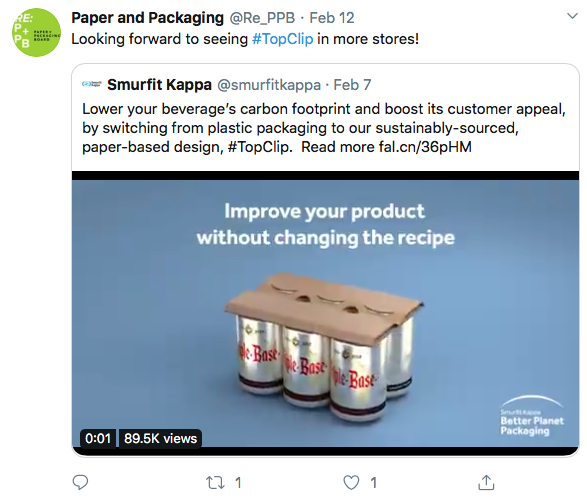
With the advent of the global circular economy movement, it soon becomes clear just how many everyday items can’t be recycled. It’s quite alarming. We’ll never reach zero waste unless we find innovative solutions to meet this imperative.

Take plastic, for example. The following plastic packaging/ additional items cannot be recycled:

  • plastic single use shopping bags
  • straws
  • plastic film wrap
  • frozen food bags (nearly all vegetables are sold in non-recyclable bags)
  • cereal box liner
  • chip bags
  • granola bar, candy bar and nearly all snack items wrappers
  • six-pack rings
  • plastic hangers
  • any plastic containers that can’t be cleaned, ie toothpaste tubes

Back before I was aware that these particular pieces couldn’t be recycled, it was exciting to end the month with an empty kitchen garbage bin. But now that I’m in the know, and I see the waste stack up, I feel maximum frustration. We have to stop, focus and fix.

Screen Shot 2020-02-13 at 10.09.07 PM.png Thankfully, innovative sustainability companies have done just that. According to Healthy Human, the following are the top sustainable packaging innovations of 2019:

  • Loop, Returnity and Share Pack – companies that enable consumers to conveniently return packaging either by dropping off at targeted locations, or sending back in company provided totes
  • Plant based packaging – plastics made from plants
  • Edible packaging – typically this is seaweed, hopefully they’ll soon find additional alternatives
  • Plantable packaging – contains seeds so the packaging can be planted after use
  • Compostable plastic alternatives
  • Minimal packaging design
  • Upcycled or recycled packaging

Screen Shot 2020-02-13 at 10.09.27 PM.png

Sustainable packaging solutions are here. All we need now is to grow demand which will come from our consumer decision making. We simply must be motivated to seek these sustainably packaged products out and use our wallets to influence corporations to switch. If we all refuse to buy particular brands because of the packaging, corporations will soon wise up.

We can DO THIS!~

© Copyright 2018 – 2020. ALL Rights Reserved.
GallantLogoNWST-75

ST-Saga-CovFrnt-72dpi-300

Are You Ever Confused About What Can Be Recycled? | Check Out This Link

Washington (GGM) Analysis | February 10, 2020
NWHillReport-Pic by Noreen Wise

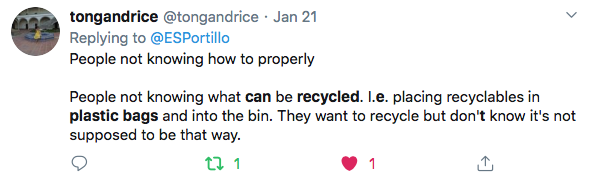
Recycling has the world’s undivided attention as we strive to reach our lofty goal of zero waste.  Proper recycling is of the utmost importance in the new circular economy era. As we attempt to deposit each item into the correct bin, it’s become more clear that the packaging industry has to be overhauled.

  • Paper labels stickered to a glass container is a very big problem. When glass is pure,  it’s 100% recyclable. When paper stickers are added to the mix, it changes everything.
  • How about the bubble wrap mailing envelopes? Paper on the outside, plastic inside. These can’y be recycled, which is unacceptable.
  • Toothpaste has to have a package redesign as well. It’s impossible to recycle toothpaste tubes because they can’t be cleaned.
  • Plastic bags can’t be recycled. This includes bread bags, frozen fruit and vegetables, Saran wrap, sandwich bags, etc.
  • If we can’t reuse or recycle, we must refuse.

On the subject of cleaning, any plastic container that’s dirty cannot be recycled. Plastic packaging with skinny necks, and there are many, are a very serious problem. The hair conditioner I use, is nearly impossible to clean. I have to work so hard at it, I become aggravated at the selfish business practices of the manufacturer. My time is very valuable. Being forced to be clever and resourceful after a long day of work, so that the manufacturer’s job is easier, isn’t right.

Screen Shot 2020-02-10 at 10.10.21 PM.png

Here’s an exceptional link that makes recycling super easy. Just enter the name of the item you want to recycle, and it will tell you how to take care of it.

By the way, plastic shopping bags cannot be recycled either. ZeroWaste.gov recommends that these be recycled by returning them to the store where they came from. Excellent idea! Better yet, invest in reusable bags to make your life easier, and the world a better place.~

Screen Shot 2020-02-10 at 10.13.36 PM.png

© Copyright 2018 – 2020. ALL Rights Reserved.
GallantLogoNWST-75


What Can Be Composted? | Circular Economy

Washington (GGM) Analysis | February 8, 2020
NWHillReport-Pic by Noreen Wise

Composting is quickly becoming a very big deal. Knowing what can be composted, particularly at home, will net many positive rewards for you as an individual as well as your household, the environment, and for contributing in the lowering of global atmospheric carbon levels.

Screen Shot 2020-02-08 at 3.39.15 PM.png

Since there are so many benefits to composting, the sooner we start, the better. For the most part, it’s broken down to a solid mix  of “Greens” and “Browns,” the add a bit of water to the bin. Per the US EPA, the breakdown is as follows:

GREENS

  • all fruits & vegetables scraps
  • coffee grounds & tea bags
  • egg shells
  • grass clippings
  • yard trimmings
  • house plants
  • animal manures (except dog and cat)
  • seaweed

BROWNS

  • paper
  • cardboard
  • shredded newspaper
  • branches
  • dead leaves
  • pine needles
  • paper napkins
  • straw and hay
  • sawdust
  • corn stalks
  • dryer lint

Screen Shot 2020-02-08 at 6.16.52 PM.png

Check your city to see of they have compost drop off stations. Many towns and cities do. Washington DC for example, has compost drop-off at every farmers market, and during winter, there are three locations, one of which is opened on Sundays. Spring and summer months, the public can pick up compost for free to use in home gardens.

We’ve got this, LET’S GO!~

© Copyright 2018 – 2020. ALL Rights Reserved.
GallantLogoNWST-75

Climate Change & Education | US Botanic Garden in DC

Washington (GGM) Analysis | February 2, 2020
NWHillReport-Pic by Noreen Wise

With Italy’s official announcement at the beginning of the new year, that all schools will now teach sustainability & climate change, many American educators are looking for ways to incorporate climate change lesson plans into their curriculum.

This is a big deal. Education will curb the fears that many young students harbor when they hear repeated warnings about the future. News flashes on phones about apocalyptic wildfires that killed a billion animals, and destroyed thousands of homes, is massively anxiety provoking. Lack of information fuels their concern, and action oriented facts curb it.

With this in mind, it was very exciting to see the impactful event at the US Botanic Garden on Capitol Hill Thursday evening January 30, 2020 for teachers in the Washington DC and outlying suburbs. Interactive tables, featuring climate change lesson plans, were spread throughout the breathtaking flora. Sustainability, the environment and nature were also included. Very inspiring. Nature itself is therapeutic. Studying nature along with climate action will improve the mental health of our youth as we rush to adapt to the crushing reality of the climate crisis.

HillReport2-2-2020a

Modeling the importance of composting was powerful, especially on Capitol Hill where Mitch McConnell is blocking compositing in the dining halls in the Senate and House office buildings.

The following are several of the innovative lesson plans featured at the event:

  • Renewables and Nonrenewables, Oh My!
  • Waste Less, Recycle More
  • Greenhouse Manual by the US Botanic Garden: “exploring ways to incorporate a greenhouse as a hands-on learning environment for students of all ages.”
  • School Tree Planting Program
  • Native Knowledge, Teaching America’s Whole Story – created by the Smithsonian’s National Museum of the American Indian
  • Living Earth Teach-In: Sustaining our Future through Indigenous Knowledge
  • Air Quality Action Guide
  • What You Should Know About Ground Level Ozone and Particle Pollution
  • An Educators Guide to the Meaningful Watershed Educational Experience (MWEE)
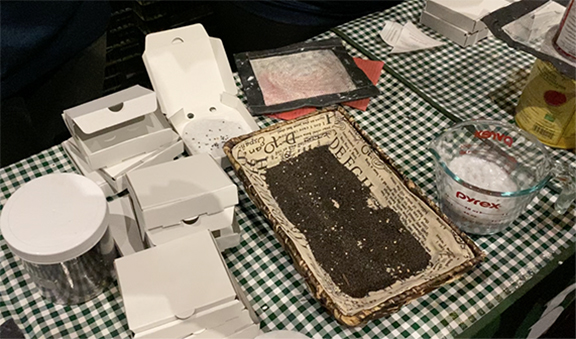
  • Oh, and creating seed pizzas that will make spring planting so much easier (this was amazing)

HillReport2-2-2020b

HillReport2-2-2020c

© Copyright 2018 – 2020. ALL Rights Reserved.
GallantLogoNWST-75

ST-Saga-CovFrnt-72dpi-300

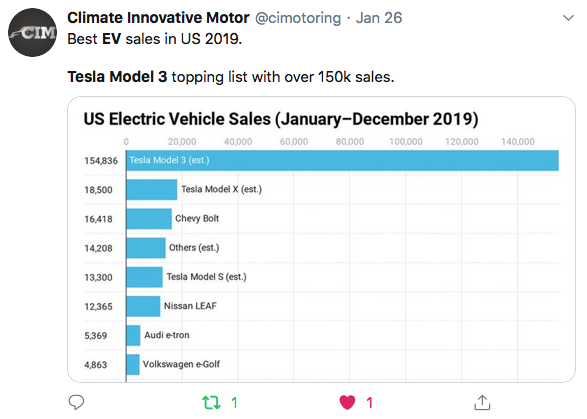
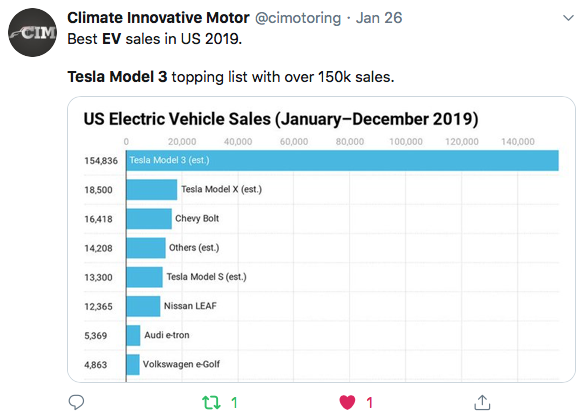
Tesla Crushes It In 2019| How Will Other EVs Fair in 2020?

Washington (GGM) Analysis | January 29, 2020 NWHillReport-Pic by Noreen Wise After a ten year struggle to become profitable, Tesla nailed it in 2019. The 4th quarter was the turning point according to CNN. Some of the key factors for increased growth in consumer demand that put Tesla into the black are:
  • range
  • how long it takes to charge
  • how many public charging stations exist in local communities
  • and the EV car price
Every single one of these critical factors have moved in the right direction.
  • range increased with the new average at 200 miles per full charge
  • charging time went down significantly and now only averages a quick 20 minutes
  • public charging stations have mushroomed, not only businesses providing them in corporate parking lots to employees, but stores offering charging stations to consumers as a competitive advantage
  • EV car prices have dropped substantially
HillReport1-29-2020 Climate action focused states such as New York, California, Connecticut and Massachusetts have crafted creative carrots and stick, incentives and regulations, creating a patchwork of solutions that are driving results. Very happy for Tesla to finally experience the upside of being an innovator, after schlepping through the painful wilderness for so long. In 2020, Tesla will have to face a much more competitive landscape, now that most of the obstacles in the EV marketplace have been eliminated. The following is CNET’s Road Show’s official 2020 EV lineup by range:
  • Tesla Model S |373 miles | $79,990
  • Tesla Model 3 | Long Range 330 miles | $44,500
  • Tesla Model X | 328 miles | $81,000
  • Chevrolet Bolt EV | 259 miles | $36,620
  • Hyundai Kona Electric | 258 miles | $36,990
  • Kia Niro EV (SUV) | 239 miles | $38,500
  • Jaguar I-Pace | 234 miles | $69,850
  • Nissan Leaf Plus | 226 miles | $36,550
  • Audi e-tron | 204 miles | $75,000
  • Porsche Taycan | 201 miles | $150,900
  • BMW i3 | 153 miles | $44,450
  • Nissan Leaf | 150 miles | $29,990
  • Mini Cooper SE | 110 miles | $20,000
  • Honda Clarity Electric | 89 miles | lease only
Very extensive options. But the Tesla Model 3 certainly shines amongst its peers.~ HillReport1-29-2020

© Copyright 2018 – 2020. ALL Rights Reserved.

This image has an empty alt attribute; its file name is esgmark75.jpg

This image has an empty alt attribute; its file name is gallantarcher_3d_socialmedia.jpg